I. A Severed Tongue, a Head, and Thirty Coffins
In 756 AD (the fifteenth year of the Tianbao era of the Tang Dynasty), Luoyang City. An Lushan's rebel army brought Yan Gaoqing, the Prefect of Changshan and cousin of Yan Zhenqing, the Prefect of Pingyuan, to the city tower.
Previously, the Yan brothers had joined forces to raise the banner of resistance in the lands of Yan and Zhao, cutting off An Lushan's rear. When the An Lushan Rebellion broke out, Yan Zhenqing in Pingyuan Prefecture was already prepared—he secretly fortified the city defenses and stockpiled grain under the pretext of "rain damage to the city walls" while outwardly indulging in wine and poetry with literati to lull An Lushan into complacency. When the rebel army marched south and the prefectures of Hebei fell like dominoes, only Yan Zhenqing decisively executed the messengers and ascended the city to rally the troops. He sent people to contact Yan Gaoqing in Changshan overnight, agreeing on a joint plan. Yan Gaoqing raised troops in Changshan in response, cutting off the rebel army's supply line, greatly astonishing An Lushan, who urgently dispatched a large army to besiege Changshan.
After the fall of Changshan, An Lushan beheaded Yan Gaoqing's young son, Yan Jiming, in front of him. Yan Gaoqing remained unmoved, cursing relentlessly. To stop his voice, the rebel army first cut off his tongue and ultimately dismembered him.
In this battle, the Yan family was filled with loyal martyrs, historically recorded as "more than thirty fathers, brothers, sons, and younger brothers died on the battlefield." Yan Jiming's head was hung on the city gate for public display. This young man, who had traveled between Changshan and Pingyuan many times to deliver messages, ultimately remained only as an unrecognizable head.
Two years later, after the An Lushan Rebellion was quelled, Yan Zhenqing sent his nephew Yan Quanming to search for the remains of his family in the ruins. In the end, they only recovered a piece of Yan Gaoqing's foot bone and the head of his nephew Yan Jiming. Facing this once-vibrant head, now only dry bones, the 50-year-old Yan Zhenqing spread out paper in grief. This is the origin of the 'Draft of a Requiem to My Nephew.'
II. 'Draft of a Requiem to My Nephew': A Psychological Cross-Section in 234 Characters
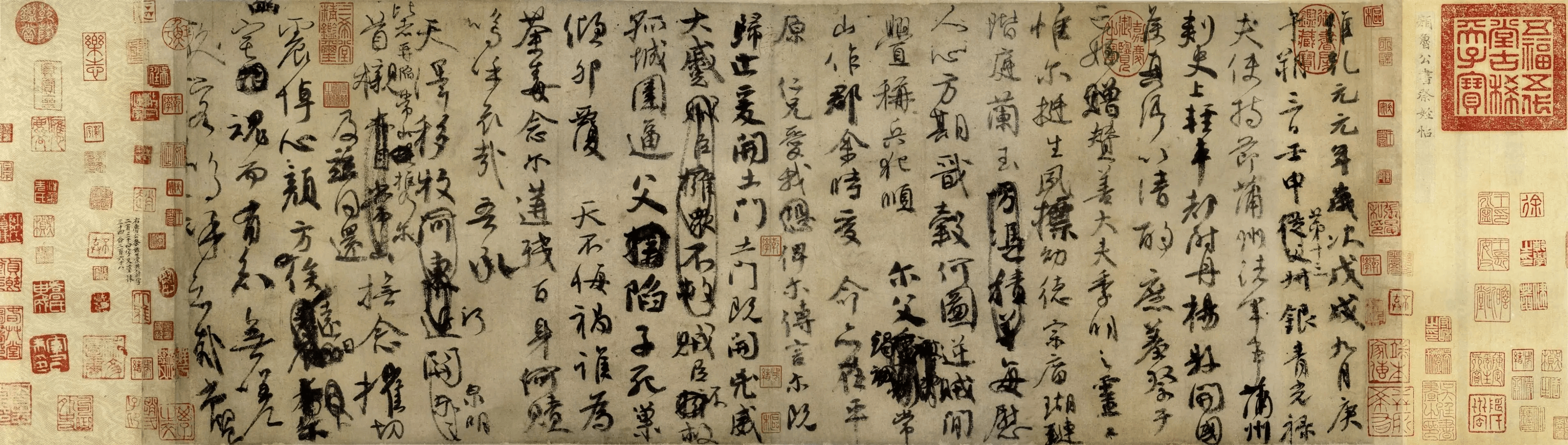
The full name of the 'Draft of a Requiem to My Nephew' is 'Draft of a Requiem to Ji Ming, the Honorary Grand Master of Instruction.' It is not a meticulously considered work of calligraphy, but a draft. On the paper, we can clearly read the emotional waves of Yan Zhenqing.
1. Content Logic: From Narration to Accusation
The content of the requiem can be divided into three logical stages:
- Restrained Narration: The beginning records the time and official titles, with a relatively calm writing style.
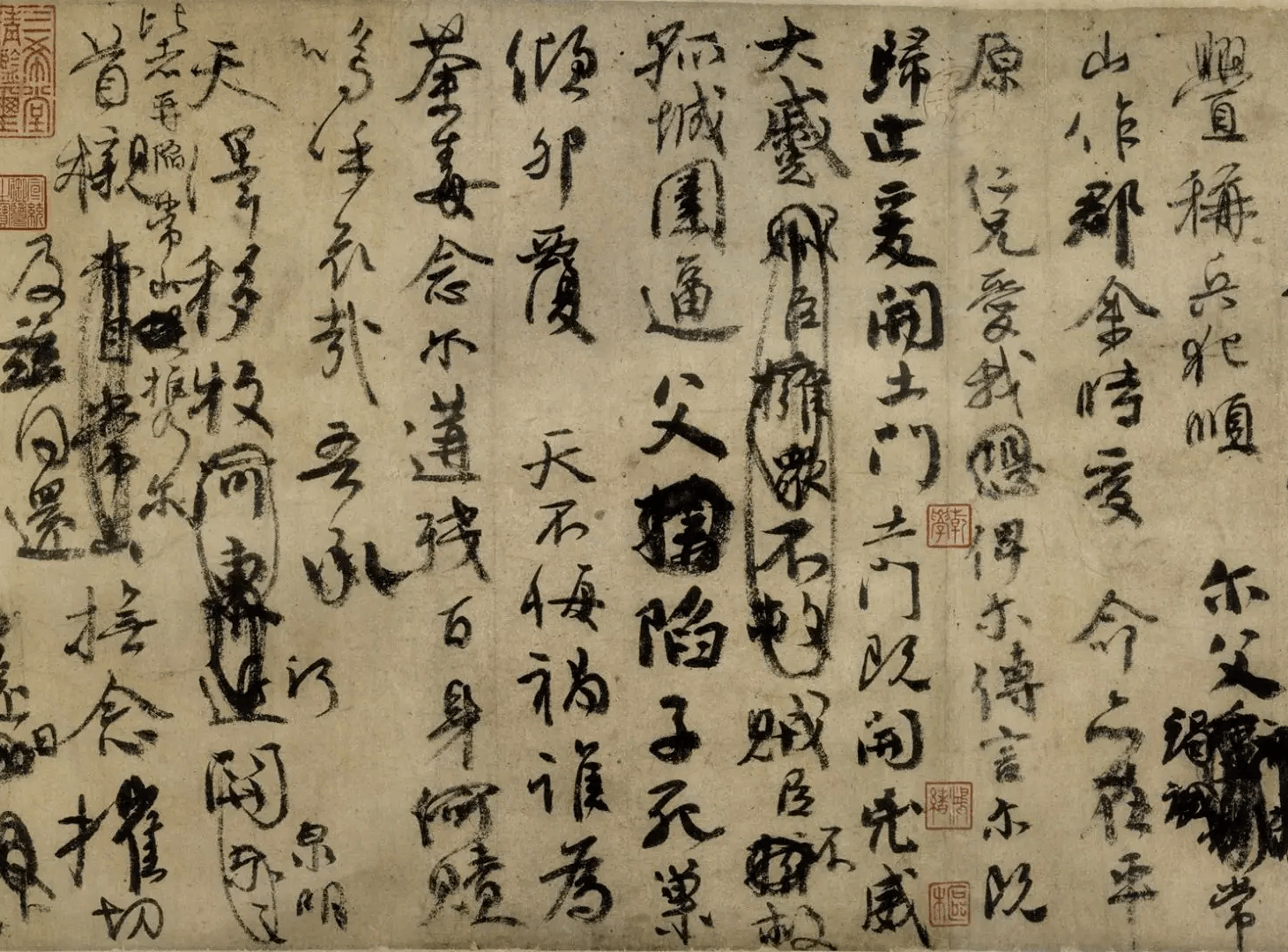
- Angry Transition: Describing An Lushan's rebellion ("The traitor An Lushan took advantage of the opportunity to create chaos") and the key betrayal—when Changshan City fell, Wang Chengye, the defending general of Taiyuan, held back his troops and did not come to the rescue ("The treacherous minister did not rescue, the isolated city was besieged"). Here, Yan Zhenqing's ink color significantly darkens, and the brushstrokes begin to become激越.
- Emotional Collapse: When mentioning the tragic death of his nephew and the disaster of his entire family, the writing has completely lost its structure. The phrase "Alas, alas" appears repeatedly at the end, and the dry, parched strokes desperately rush on the paper, indicating that he has lost even the physiological instinct to dip the brush in ink under extreme grief.
2. Technical Parameter Analysis
- Revision Data: There are more than 30 revisions in the full text of 234 characters. This high frequency of revisions is not for flowery rhetoric, but a physiological reaction to the intense struggle of thought and emotion.
- Continuity: Unlike the reserved independence of each character in Wang Xizhi's letters, a large number of connected strokes (connecting threads) appear in the later stages of the 'Draft of a Requiem to My Nephew,' and the lines show a nearly convulsive tension.
III. The Revolution of Yan Style: From Aristocratic Aesthetics to the Backbone of the Literati
Before Yan Zhenqing, the aesthetic coordinate of Chinese calligraphy was Wang Xizhi of the Eastern Jin Dynasty. Wang's style pursued the elegance, lightness, and detachment of the "Orchid Pavilion," which is a typical aesthetic of the aristocratic class.
1. Structural Power Reshaping
Yan Zhenqing completed the "Tang Dynasty Revolution" in the history of calligraphy through the following technical innovations:
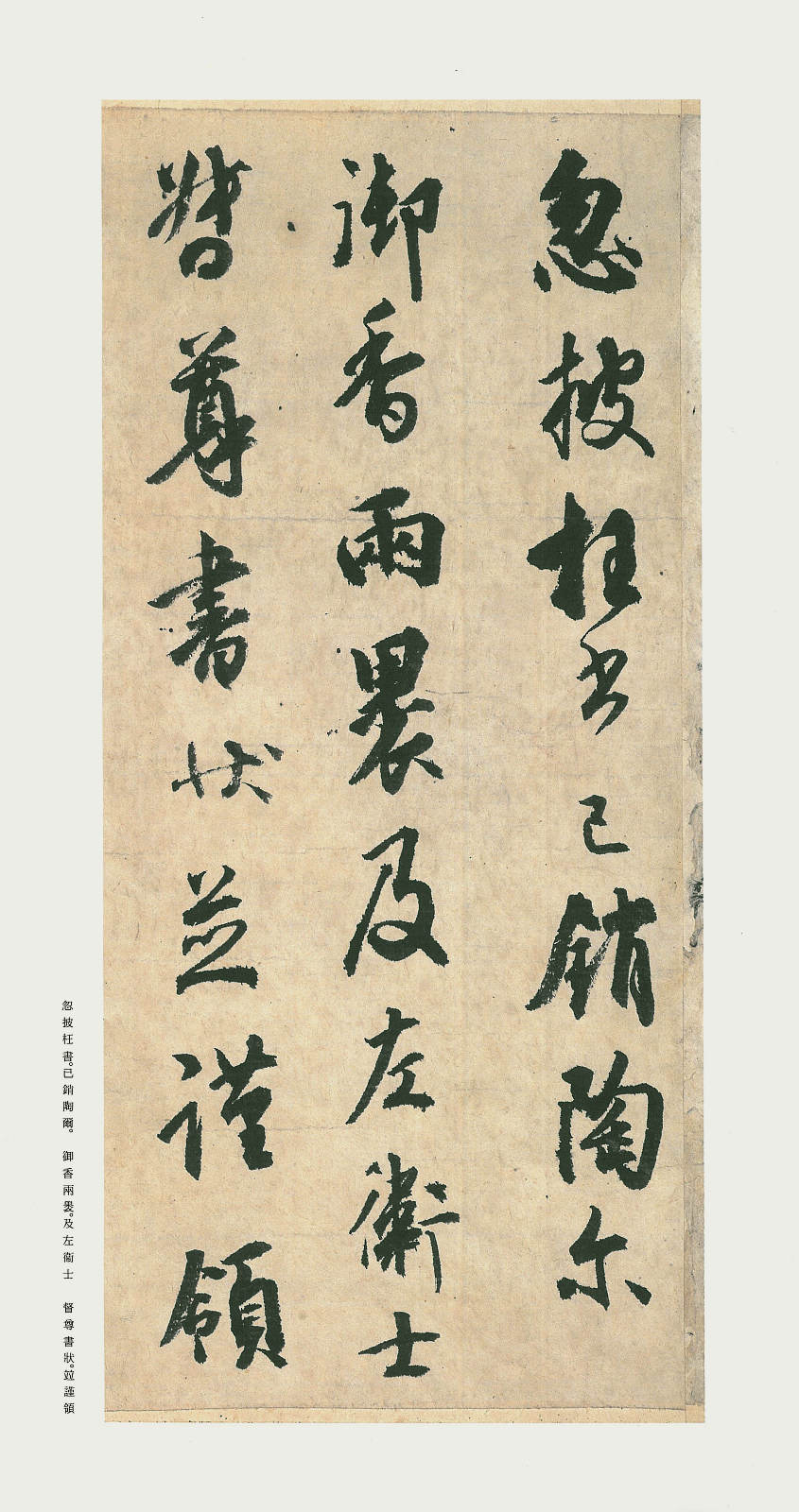
- Frontal Composition: Abandoned Wang Xizhi's side-stroke tendency and adopted a frontal (central) stroke. The shape of the characters changed from ‘inner tuck’ converging inward to ‘outer extension’ stretching outward with sinews and bones contained inside.
- Volume and Gravity: Yan's style has thin horizontal strokes and thick vertical strokes, and the ends of the strokes often have heavy presses (such as the silkworm head and swallowtail of the "捺" stroke). This treatment gives Chinese characters an unprecedented "sense of weight," as stable as bronze ware.
2. Comparison from an International Perspective
When 8th-century Europe was in the early stages of the "Carolingian Renaissance," with monks writing slender "Uncial script" on parchment, Yan Zhenqing's stele inscriptions had already transformed Chinese characters into a "national font" with public commemorative significance through the texture of stone.
IV. Historical Influence: From the Great Tang to Japan
Yan Zhenqing's influence, with the cultural output of the Tang Empire, established an aesthetic order covering East Asia.
1. China: The Materialization of the Literati's Backbone
- Song Dynasty Revival: Song Dynasty literati such as Su Shi and Huang Tingjian strongly promoted Yan Zhenqing, not only because of his brush and ink, but because his "calligraphy reflected his person." Yan's style became synonymous with "loyalty and righteousness."
- The Underlying Tone of Printing: The square and stable structure of Yan's style profoundly influenced the fonts of later woodblock printing. The most commonly used "Song typeface" and "Fang Song typeface" on modern computer screens still retain the genes of Yan's style in their skeletal logic.
2. Japan: From "Wayō" to "Sanpitsu"
Yan Zhenqing's influence on Japanese calligraphy was decisive:
- Heian Period: The envoy to Tang, Kūkai, brought Yan Zhenqing's ink works back to Japan. In Kūkai's 'Fūshin-jō (Letters),' the thick and rounded lines clearly absorbed the nourishment of Yan's style.
- Sanpitsu and Sanseki: The most famous "Sanpitsu" (Kūkai, Emperor Saga, Tachibana no Hayanari) in the history of Japanese calligraphy were deeply influenced by Yan Zhenqing. Yan Zhenqing's style of calligraphy, which did not deliberately pursue neatness but emphasized the passion of life, prompted Japanese calligraphy to shift from imitating Wang Xizhi to a more local "Wayō calligraphy."
- Modern Echoes: In 2019, the Tokyo National Museum in Japan held the exhibition "Yan Zhenqing: A Masterpiece Beyond Wang Xizhi." Even in the 21st century, to see the original 'Draft of a Requiem to My Nephew,' Japanese audiences queued for more than 4 hours, and the highest number of visitors in a single day exceeded 10,000.
V. The Last Moments of a Martyr
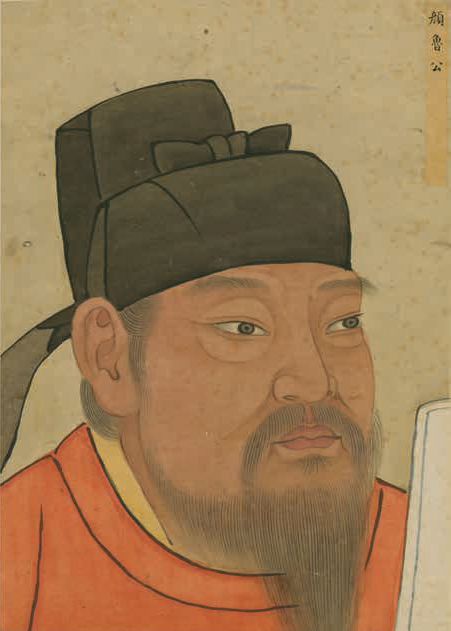
After the An Lushan Rebellion, Yan Zhenqing was promoted to Minister of Justice for his meritorious service and was granted the title of Duke of Lu. However, his upright and unyielding character caused him to be repeatedly ostracized in the court. At the age of 76, when Li Xilie, the military governor of Huaixi, rebelled, the prime minister Lu Qi, jealous of Yan Zhenqing's reputation, suggested sending this elderly veteran to the rebel camp to proclaim imperial authority.
This was a blatant assassination, but Yan Zhenqing accepted this ticket to death. Before leaving, he said to his family: "If I do not die, I will have no face to see the late emperor in the afterlife." In Li Xilie's camp, he was awe-inspiring and refused to kneel. The rebel army tempted him with high positions and generous salaries, but he sternly refused; they threatened him with torture, but he remained unmoved. Li Xilie once sent someone to dig a pit, threatening to bury him alive, but Yan Zhenqing calmly said: "Life and death are destined, why say more!"
In August of the first year of the Zhenyuan era (785 AD), Li Xilie, seeing no hope of persuading him to surrender, hanged Yan Zhenqing at Longxing Temple in Ruzhou. This master of calligraphy, who emerged from bloodshed, finally completed his last "calligraphic work" with his life—practicing the "uprightness" in his brushwork with his physical body.
Controversies and Historical Limitations
Although Yan Zhenqing is revered as the "Second Sage," from a rational point of view, he is not without controversy:
- The Tendency of Aesthetic Simplification: The powerful dominance of Yan's style caused later generations of calligraphy to fall into a blind pursuit of "thickness" for hundreds of years, resulting in some works becoming stolid (commonly known as "ink pigs"), weakening the flexible linear expression of Chinese characters.
- The Logic of a Martyr: When Yan Zhenqing was 76 years old, knowing it was a trap, he still went to Li Xilie's rebel camp to persuade him to surrender and eventually died for his country. This behavior may be regarded as "ineffective sacrifice" in modern political logic, but in the Confucian context at the time, this was the only way for him to complete the last "calligraphic work" of his life.
VI. Conclusion
What Yan Zhenqing left to future generations is not only the 234 messy characters in the 'Draft of a Requiem to My Nephew,' but a paradigm of how "writing can carry dignity."
When Wang Xizhi lamented the impermanence of life by the clear stream in the Orchid Pavilion, calligraphy was a flowing poem, carrying the tipsiness and comfort of the Wei and Jin dynasties; when Yan Zhenqing wielded blood and tears in front of the heads of his relatives, calligraphy became an unyielding bone, forging the strength and沉郁of the Great Tang. This power, piercing through the smoke of the An Lushan Rebellion, eventually became the foundation of Chinese civilization.