Introduction
"The movements of the sun and moon seem to emerge from it; the bright stars of the Milky Way seem to spring from within it."
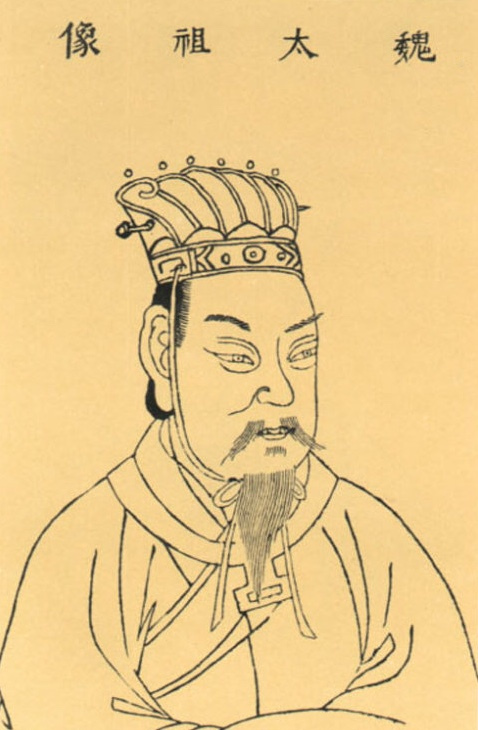
In the autumn of 207 AD, Cao Cao, at the age of 52, ascended Mount Jieshi by the Bohai Sea. He had just led his army to eliminate the last enemy in the north. On his way back, standing on the summit overlooking the sea, he wrote this 44-character poem.
These two lines are the most astonishing imagination in the entire poem: the movement of the sun and moon seems to rise from the sea; the brilliance of the Milky Way seems to emerge from the sea.
How broad must the mind of a person who can "contain the sun, moon, and stars" be?
"Viewing the Sea," with its extant 44 characters, is the earliest complete landscape poemin Chinese literary history and also thefirst poem to truly take nature as its aesthetic object. Before this, landscapes in Chinese poetry were merely tools for expressing emotions; after this, landscapes became an independent aesthetic pursuit.
American sinologist Burton Watson commented: "The power of this poem lies in its integration of personal aspirations with the vastness of the universe. Cao Cao is not someone admiring the scenery, but someone in dialogue with the spirit of heaven and earth."
Original Poem
Viewing the Sea
Eastward I climb Mount Jieshi to view the vast sea. How the water sparkles, and the isles rise sublime. Trees and bushes grow thick, abundant grasses thrive. Autumn winds blow bleak, and mighty waves surge high. The movements of the sun and moon seem to emerge from it; The bright stars of the Milky Way seem to spring from within it. How fortunate am I, to sing aloud my aspirations.
I. Line-by-Line Interpretation
First Couplet: Setting the Theme
Eastward I climb Mount Jieshi to view the vast sea.
Ten characters explain the time, location, and purpose.
"Mount Jieshi": Present-day Changli, Hebei, 15 kilometers from the Bohai Sea, a famous ancient place for viewing the sea. "Vast sea": The blue sea; the character "vast" describes both the color and implies depth.
Concise and powerful, an extraordinary beginning.
Second Couplet: Static Scene
How the water sparkles, and the isles rise sublime.
Describing the static sea: the water ripples, the islands stand tall.
"Sparkles": The gentle lapping of the water. Standing at a high point and looking down, Cao Cao saw not raging waves but the vastness of the gently rippling water. "Sublime": Standing tall, describing the towering majesty of the islands.
One water, one mountain, one moving, one still, forming a sharp contrast.
Third Couplet: Close-up Scene
Trees and bushes grow thick, abundant grasses thrive.
Describing the close-up scene on the island: lush trees, abundant vegetation.
These two lines seem incidental but serve two purposes:
- Contrasting with "autumn winds blow bleak"—although it is autumn, the island is still full of vitality
- Foreshadowing the "mighty waves surge high"—only with lush vegetation can it withstand the raging waves
Fourth Couplet: Dynamic Scene
Autumn winds blow bleak, and mighty waves surge high.
Describing the dynamic sea: autumn winds rise, waves surge.
"Autumn winds blow bleak" indicates the season. In classical Chinese poetry, "autumn winds" often carry a sense of sadness. But the autumn wind in Cao Cao's writing does not bring desolation; instead, it stirs up the vastness of the sea.
"Mighty waves surge high" echoes the second couplet's "how the water sparkles": one static, one dynamic, creating a rhythm in the image.
Fifth Couplet: Imagination (Climax of the Poem)
The movements of the sun and moon seem to emerge from it;>The bright stars of the Milky Way seem to spring from within it.
This is the most astonishing imagination in the entire poem.
The sun, moon, and Milky Way—these forces that dominate the universe—seem to emerge from the sea. The sea encompasses all things in the world, containing the sun, moon, and stars.
The word "seem" is used exquisitely: this is not a real scene but an imagination. Cao Cao did not really see the sun and moon rising from the sea; he is expressing his aspirations.
Shen Deqian of the Qing Dynasty commented: "It has the atmosphere of swallowing the universe."
Sixth Couplet: Conclusion
How fortunate am I, to sing aloud my aspirations.
A common expression in Han Yuefu poetry. "How fortunate am I" expresses luck and emotion; "to sing aloud my aspirations" highlights the theme—all this description is to express ambition.
The words "aspirations" are the highlight of the entire poem. Cao Cao's viewing of the sea is not for admiring the scenery but to express his ambition to unify the world and establish great achievements.
II. Artistic Features
1. Interplay of Reality and Imagination
The poem is divided into two parts:
- Reality: The first eight lines describe the real scenery seen
- Imagination: The last four lines describe imagination ("The movements of the sun and moon seem to emerge from it")
The combination of reality and imagination creates both a sense of imagery and a transcendent artistic conception.
2. Contrast Between Motion and Stillness
| Stillness | Motion |
|---|---|
| How the water sparkles | Mighty waves surge high |
| The isles rise sublime | Autumn winds blow bleak |
| Trees and bushes grow thick | The movements of the sun and moon |
Alternating between motion and stillness makes the scene vivid.
3. Grand Imagery
The chosen images are all magnificent:
- The sea: encompassing all things
- The sun and moon: dominating time
- The Milky Way: traversing the universe
The larger the image, the more magnificent the atmosphere.
4. Concise Language
The entire poem consists of 44 characters, with no superfluous words. It is detailed when it needs to be (describing scenery) and concise when it needs to be (explaining the background).
The more concise the language, the more magnificent the atmosphere.
III. Creative Background
Northern Expedition Against the Wuhuan
In 207, Cao Cao launched a northern expedition against the Wuhuan—nomadic people living in the northern grasslands of China.
This battle was extremely arduous. The Cao army "led their troops out of Lulong Fortress, but the roads outside the fortress were completely impassable, so they cut through mountains and filled valleys for more than five hundred miles," traversing the uninhabited area of the Yanshan Mountains. Ultimately, they defeated the Wuhuan at White Wolf Mountain and beheaded Tadun Chanyu.
On the way back from the victorious campaign, Cao Cao passed by Mount Jieshi and ascended the summit to view the sea.
Peak of Achievement
At this time, Cao Cao was 52 years old and had basically unified the north, eliminating the last frontier troubles.
Standing on Mount Jieshi, looking at the vast sea, he was filled not only with the elation of a victor but also with thoughts about the universe and life:
The sun and moon move endlessly, but life is only a few decades. The sea can contain the sun, moon, and stars; can I contain the world?
This kind of thinking transformed into the famous line "The movements of the sun and moon seem to emerge from it."
Birth of Landscape Poetry
Before "Viewing the Sea," natural descriptions in Chinese poetry were all "tools":
- The Book of Songs used nature to evoke emotions
- The Songs of Chu used nature for comparison
"Viewing the Sea" is different—the landscape itself is the main subject.
Cao Cao used a large amount of space to describe natural scenery, and he wrote it so specifically and vividly. This was the first time in the history of Chinese poetry.
After "Viewing the Sea," landscape poetry gradually developed and grew stronger, eventually becoming an important genre in Chinese poetry.
IV. Historical Status
Inaugural Work of Chinese Landscape Poetry
| Period | Representative Works | Features |
|---|---|---|
| Pre-Qin | Book of Songs, Songs of Chu | Nature as a tool for expressing emotions |
| Jian'an | Viewing the Sea | Nature becomes the main aesthetic subject |
| Southern Dynasties | Xie Lingyun's landscape poetry | Landscape poetry becomes an independent genre |
| Tang Dynasty | Wang Wei, Meng Haoran | Landscape poetry flourishes |
Without "Viewing the Sea," there would be no landscape poetry in later generations.
Representative Work of the Jian'an Style
"Jian'an Style": The common characteristics of literature during the Jian'an period—generosity and sorrow, strength and vigor, and direct expression of emotions.
"Viewing the Sea" is simple and vigorous, without flowery language, only sincere emotions. It is a typical representative of the Jian'an style.
Famous Poem Recited Throughout the Ages
Historical evaluations:
- Liu Xie, The Literary Mind and the Carving of Dragons: "Viewing the sea and expressing aspirations, the ambition lies in swallowing Wu and Wei."
- Shen Deqian, Source of Ancient Poetry: "It has the atmosphere of swallowing the universe."
- Yuan Xingpei, History of Chinese Literature: "The inaugural work of Chinese landscape poetry."
V. Contemporary Value
Pure Landscape Aesthetics
Before "Viewing the Sea," the Chinese appreciation of landscapes was "moralistic"—landscapes symbolized human virtues.
"Viewing the Sea" pioneered pure landscape aesthetics—appreciating the beauty of the landscape itself. This shift in aesthetic approach continues to influence us today.
Awakening of Cosmic Consciousness
"The movements of the sun and moon seem to emerge from it"—Cao Cao realized that individual life is short, but the universe moves endlessly.
This cosmic consciousness has repeatedly appeared in Chinese literature since then:
- Zhang Ruoxu, "Moonlit Night on the Spring River": "Who was the first to see the moon by the river? When did the river moon first shine on people?"
- Su Shi, "Ode to the Red Cliff": "If we look at it from the perspective of change, then heaven and earth cannot last even for an instant; if we look at it from the perspective of immutability, then things and I are both endless."
Expression of Heroic Ambition
"Viewing the Sea" is a concentrated expression of Cao Cao's heroic feelings.
He was not a petty politician but a hero with the world in his heart and ambitions for thousands of miles. Standing at the highest point in history, looking at the infinite universe, he asked: How should one spend this life?
His answer is: Be as inclusive as the sea, move as endlessly as the sun and moon.
VI. Cao Cao's Biography (Supplement)
| Year | Age | Event |
|---|---|---|
| 155 | 0 | Born in Qiao County, Pei State |
| 174 | 19 | Recommended as Xiaolian (civil service candidate) |
| 196 | 41 | Welcomed Emperor Xian of Han to Xu, "held the emperor to command the nobles" |
| 200 | 45 | Battle of Guandu, defeated Yuan Shao |
| 207 | 52 | Northern expedition against the Wuhuan, wrote "Viewing the Sea" |
| 208 | 53 | Battle of Red Cliffs, wrote "Short Song Style" |
| 220 | 65 | Died of illness in Luoyang |
Cao Cao (155-220), courtesy name Mengde, was from Qiao County, Pei State. He was a politician, military strategist, and writer in the late Eastern Han Dynasty, the leader of the "Three Caos," and the founder of Jian'an literature.
VII. Conclusion
What can be written with 44 characters?
Cao Cao wrote a sea—how the water sparkles, and the isles rise sublime. Wrote a wind—autumn winds blow bleak, and mighty waves surge high. Wrote a universe—the movements of the sun and moon seem to emerge from it.
This is "Viewing the Sea": the inaugural work of Chinese landscape poetry, the first sea in history that swallows the sun, moon, and stars.
Today, eighteen hundred years later, when we read this poem, we can still feel the heartbeat of that hero from a chaotic era.
Standing on Mount Jieshi, looking at the sea, he thought:
Life is only a few decades; how can we create infinity in the finite?
His answer is:
Be as inclusive as the sea, move as endlessly as the sun and moon.
This is the inspiration that "Viewing the Sea" gives us.
Appendix I: Rhythm Analysis
| Line | Content | Rhyme | Rhyme Category |
|---|---|---|---|
| 1-2 | Eastward I climb Mount Jieshi to view the vast sea | Sea | Yang |
| 3-4 | How the water sparkles, and the isles rise sublime | Sublime | Qin |
| 5-6 | Trees and bushes grow thick, abundant grasses thrive | Thrive | You |
| 7-8 | Autumn winds blow bleak, and mighty waves surge high | High | Zhi |
| 9-10 | The movements of the sun and moon seem to emerge from it | It | Dong |
| 11-12 | The bright stars of the Milky Way seem to spring from within it | It | Ge |
| 13-14 | How fortunate am I, to sing aloud my aspirations | Aspirations | Zhi |
Features: The rhymes in the first eight lines change frequently (rich scenery), while the rhymes in the last four lines tend to be unified (emotional conclusion).
Appendix II: English Translation References
Translation by Arthur Waley:
From the mountain of Stone I look out on the sea. The water so calm, The islands standing sheer. ... Sun and moon their journey make, Seem to rise from the sea. The Milky Way's bright stream Seems to emerge from its depths.
Translation by Xu Yuanchong (Phonetic Translation):
I climb Rock Mountain eastward, To view the boundless ocean. ... The sun and moon move round, As if risen from the sea. The Milky Way's bright crown, As if born in its reality.
Appendix III: Historical Evaluations
| Era | Commentator | Evaluation |
|---|---|---|
| Northern and Southern Dynasties | Liu Xie | "Viewing the sea and expressing aspirations, the ambition lies in swallowing Wu and Wei." |
| Qing Dynasty | Shen Deqian | "It has the atmosphere of swallowing the universe." |
| Qing Dynasty | Wang Shizhen | "Swallowing hundreds of generations, shining brightly." |
| Modern | Yuan Xingpei | "The inaugural work of Chinese landscape poetry." |