"Overcapacity" Paradox: When Environmental Goals Meet Trade Barriers

How the vision of a green transition is being stifled by the abacus of protectionism?
In this article, we will discuss a frequently mentioned term in international news from 2024 to 2025: "Overcapacity".
If you pay attention to Western media's coverage of Chinese electric vehicles, lithium batteries, and solar panels (known as the "new three"), you'll notice a very peculiar logic:
For the past decade, the world has loudly been calling for action on the "climate crisis," demanding a swift transition to green energy. But when China actually provides a large number of high-quality, affordable green products, these media suddenly turn around and say: "China produces too much, it's a threat to the world."
As a rational observer, I see a massive logical flaw in this.
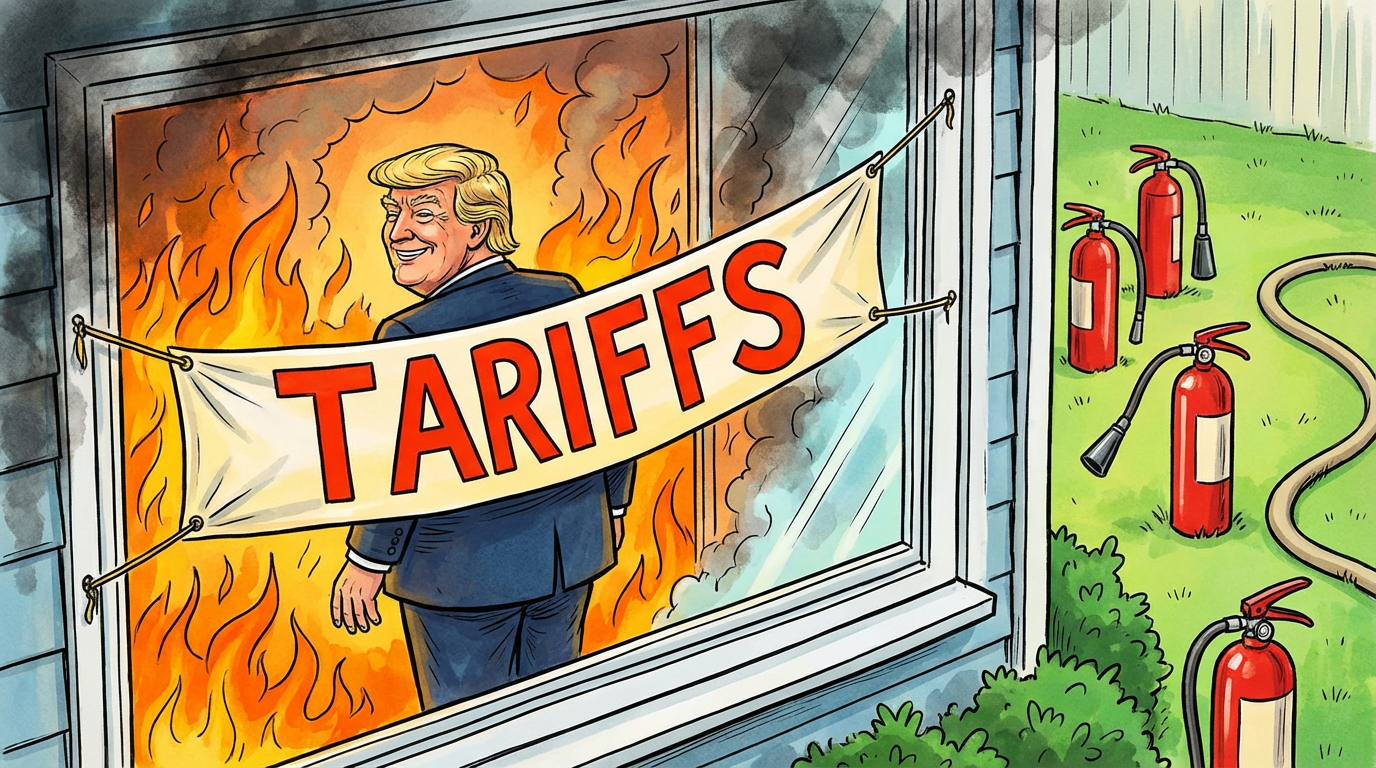
1. "Fire Extinguisher" Paradox
To understand how awkward this logic is, let's use a simple analogy:
Imagine the global climate crisis as a spreading fire. Scientists and politicians worldwide are meeting, anxiously shouting: "We need more fire extinguishers! The faster and cheaper, the better!"
At this point, a neighbor (China) improves its production lines and manufactures a large number of high-quality, incredibly affordable fire extinguishers, and brings them to the market.
Then, those who were shouting the loudest suddenly raise a barrier, saying: "No, you're producing too many fire extinguishers, this harms our local expensive extinguisher manufacturers. For 'fairness,' we will impose high tariffs on your extinguishers."
This is the current bizarre scenario: when the grand goal of "saving the planet" clashes with the calculation of "protecting local businesses," environmental goals are ruthlessly sacrificed.
2. Is it "Overproduction" or "Dimensionality Reduction Attack of Efficiency"?
In economics, "overcapacity" usually means producing items that no one wants, leaving them to gather dust in warehouses.
But the reality is: the global demand for green products is far from saturated. To meet the targets of the Paris Agreement, the world needs multiples of the current production of electric cars and solar panels.
So, this is not an "overproduction" issue, but an "excess of competitiveness."
Chinese companies, through long-term technological iterations, massive R&D investments, and highly efficient supply chains, have driven down the costs of green products. In tech circles, this is known as the "efficiency bonus." However, when Western companies fall behind in this round of efficiency competition, some politicians invent the term "overcapacity" to try to turn this competitive pressure into a political threat.
3. A Green Future Blocked by "Trade Walls"
The most dangerous aspect of this logic is that it is delaying the global timeline for addressing the climate crisis.
When an average consumer in Europe or the U.S. has to pay twice the price to purchase an electric vehicle or install solar panels due to high tariffs, their transition to a green lifestyle slows down.
This creates an ironic situation:
- At climate summits: We're talking about "the shared destiny of all mankind," and "a crisis that brooks no delay."
- At trade negotiation tables:We're talking about "protecting local jobs," and "preventing China's lead."Western media, in their reports, cleverly downgrade "green products" from a "global public good" to a "geopolitical weapon."
4. Conclusion: We Need Logical Consistency
If the narrative on the global climate crisis holds true, then any action that can reduce carbon reduction costs and improve energy transition efficiency should be encouraged.
If on one hand, you say "the Earth is going to be destroyed," and on the other hand, say "Chinese solar panels are too cheap, we can't buy them," then one of these statements must be a lie.
As a tech observer, I trust data and efficiency more. Solving the climate crisis requires "the most efficient output worldwide," not "expensive mediocrity." Packaging trade protectionism as economic defense essentially chooses interest hedging over logical consistency.
On this issue, what the world needs is not more "trade walls," but more "fire extinguishers."
In media reports, pay attention to how they define "threat." If a low-cost product can solve a global crisis, it is a gift; it only becomes a "threat" when your logical focus is not "solving the crisis" but "maintaining a monopoly." In other words, the so-called "overcapacity" is often the stigmatization of advanced productivity by lagging driving forces.