Four Rivers, One Outlet: Why Does Chinese Civilization Endure?

The four ancient civilizations all originated from rivers, yet they ended up on vastly different paths. This is not due to luck, but the result of the systemic interplay of writing, geography, and governance philosophies over thousands of years.
Four Rivers, One Outlet
The origins of human civilization are closely tied to the gifts of rivers. The intertwining Tigris and Euphrates gave rise to Mesopotamia, the Nile supported ancient Egypt, the Indus irrigated Harappa, while the Yellow River and Yangtze jointly shaped China. In the physical world, these six water systems converge to form the four 'long rivers of civilization' in early human history. They awakened almost simultaneously, yet reached entirely different conclusions—three of them either fractured, lay dormant, or were covered by sand, but the great river of Chinese civilization has never dried up.
This isn't a nationalist lament, but a serious civilizational inquiry: over thousands of years, which variables allow a civilization to maintain continuity?
Geography: The Container of Civilization
To understand the survival of a civilization, one must first understand its container.
Mesopotamia was situated on an alluvial plain between two rivers, lacking natural barriers on all sides. This made it an open garden for the surrounding nomadic tribes and empires. Sumerians, Akkadians, Babylonians, Assyrians, Persians, Greeks, Romans, Arabs—they all entered the land in turns, with each conquest introducing new languages, beliefs, and power structures, repeatedly reformatting the fundamental code of the civilization.
Ancient Egypt had a slightly better situation—the desert provided a natural buffer. However, the Nile Delta's outlet was always an open entrance for external forces from the Mediterranean—from the Hyksos to the Ptolemaic dynasty and then the Roman Empire—eventually completely overwriting the culture of the Pharaohs.
Ancient India had a more complex geography. The Himalayas provided a northern barrier, but the Khyber Pass to the northwest was like a door that could never close. Aryans, Persians, Greeks, Turks, and Mongols all poured in through this pass. Coupled with the fragmented internal terrain of the Indian subcontinent lacking a unified geographical narrative, the main line of civilization frequently split into unrelated tributaries.
In contrast, the geographical layout of Chinese civilization offered a rare balance: the Yellow and Yangtze River basins formed a vast core agricultural area capable of sustaining a large population and complex society. The north had grasslands and deserts, the west had the Tibetan Plateau, and the southeast faced the sea—these natural boundaries did not form absolute isolation but allowed for "selective permeability." External forces could enter, but once inside, they would be absorbed by this vast hinterland. More critically, the container held a considerable depth of strategic retreat: the Sichuan Basin, Jiangnan water networks, and Lingnan hinterlands formed layer upon layer of buffer zones. When northern nomads breached the Yellow River defenses, central governments could retreat south—such as during the mass migration at the end of the Western Jin dynasty, or Southern Song's survival in Lin'an after the fall of the Northern Song—the flame of civilization wouldn't extinguish due to the fall of the core area; it would merely relocate to a different chamber, waiting for another opportunity to reignite the entire construct. This calculated depth of advance and retreat was something the exposed alluvial plains of Mesopotamia could never provide.

Writing: The Gene of Civilization
If geography is the container, then writing is the gene.
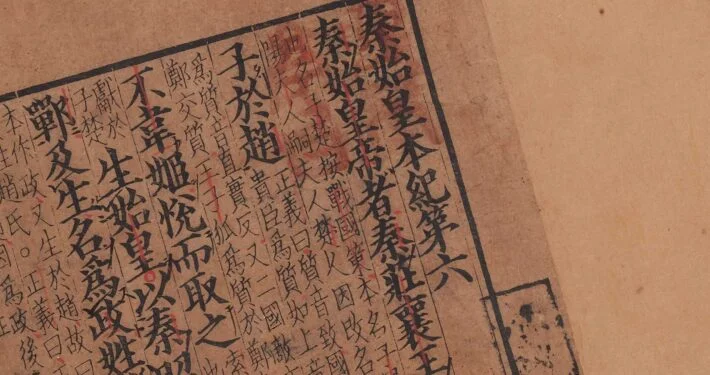
Here lies a crucial difference often overlooked: Chinese characters are the only currently used logographic writing system. Cuneiform from Mesopotamia, hieroglyphs from ancient Egypt, and seal script from ancient India have all become archaeological studies. Yet a Chinese high school student today, with adequate training, can directly read the 2000-year-old 'Records of the Grand Historian'—not a translation, not a transcription, but direct reading.
This is not coincidental. Phonetic scripts (like Latin and Arabic alphabets) are closely tied to spoken languages, and when a region's spoken language changes due to ethnic replacements, the writing system also becomes obsolete. This explains why in the same land, cuneiform gave way to Aramaic script, and then to Arabic script—each language change marked a disruption in civilizational memory.
The logographic nature of Chinese characters makes them relatively independent of specific spoken dialects. A Cantonese speaker and a Wu speaker might struggle in oral communication, but they read the same writing system, writing the same tradition. Chinese characters are not merely a recording tool for any dialect but a shared operating system for an entire civilization.
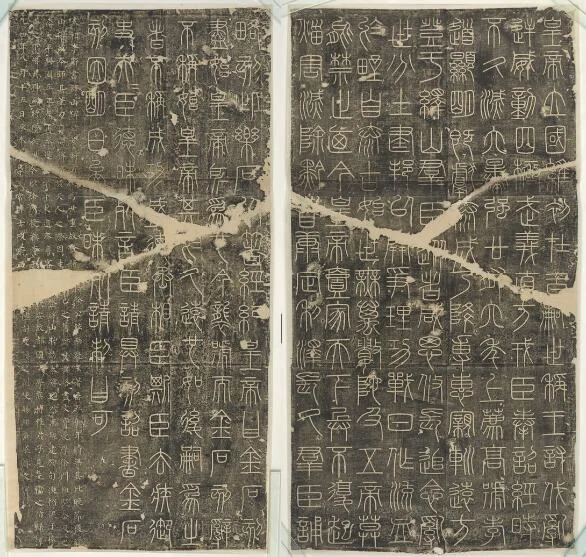
The Qin Shihuang's "unification of script" is often simply seen as an administrative order, but its civilizational significance is far deeper than its political implications. It ensured that even as dynasties changed and glyphs evolved—from small seal script to clerical script and then to regular script—the carrier of knowledge transfer, the logical system of Chinese characters, remained consistent. A Han dynasty official and a Tang dynasty poet used varying forms of writing with intrinsically linked orthographies. This cross-millennia legibility is nearly unmatched in the history of human civilizations.
The continuity of writing led to the continuity of knowledge, and the continuity of knowledge led to the continuity of systems. A unique tradition of Chinese dynasties is the compilation of histories for preceding dynasties. Every new governance cycle begins with systematically documenting and reflecting on the experiences and lessons of the previous one. It's more than academic—it represents a systematic civilizational consciousness where "where do we come from" never lacks an answer within Chinese civilization.
Governance: The Operating Logic of Civilization
Geography provides the container, writing provides the gene, but the continuation of a civilization also requires a sustained operating logic.
In this regard, Chinese civilization developed a unique governance philosophy: the concept of "All under Heaven". Unlike the Greek city-state system or Europe's feudal lord system, "天下 (All under Heaven)" is not a geographical term but a concept of order—it signifies that the core task of civilization is to maintain a unified and coordinated governance system over a vast land, allowing people from different regions and ethnicities to live under the same set of rules.
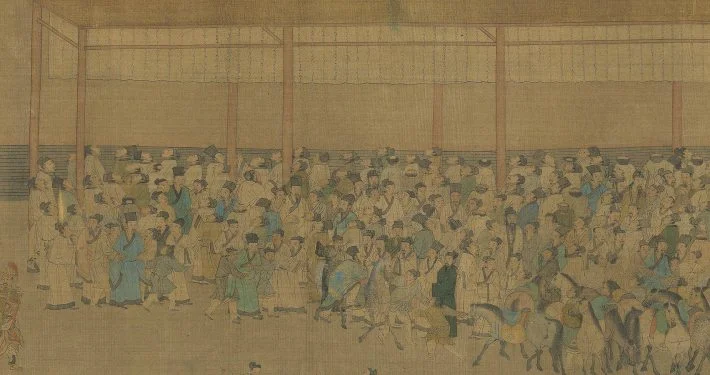
This idea gave birth to the world's earliest bureaucratic selection system. From the Han dynasty's recommendation system to the imperial examinations of the Sui and Tang dynasties, Chinese civilization developed a system to select civil servants through exams. This meant that governance was not a privilege of bloodlines but proof of competence. A peasant child from a remote village could theoretically rise to the decision-making echelons of the empire through his knowledge and effort.
The civilizational significance of the imperial examination lies in creating a mechanism for elite circulation across regions and classes. Regardless of dynastic changes, this system of selection ensured the continuous reproduction of governance capability. At the same time, all those participating in the exams read the same set of classics and followed the same value system—not just talent selection but repeated reinforcement of civilizational identity.
In contrast, other ancient civilizations often relied on specific royal or priestly classes to maintain order. Once conquerors destroyed these privileged classes, the entire governance system would collapse, the new conquerors would bring brand-new rules and beliefs, and the continuity of civilization would break.
It is noteworthy that the governance system of Chinese civilization comes with costs. Each dynastic transition is accompanied by considerable social turmoil, and the suffering of ordinary people is real. Yet after each upheaval, people choose to rebuild—not because they are forced, but because the concept of "All under Heaven" has internalized into a deep-seated civilizational consensus: division is a temporary cost, and unity is a desirable order. This consensus is not imposed by any monarch but a choice made from the introspective validation of thousands of years of historical experience.
Foundation: The Precedent of Unity
But the concept of "All under Heaven" did not become consensus out of thin air. It required a historical starting point—someone to prove for the first time, "unity is possible." This marks the irreplaceable role of Qin Shihuang and Han Wudi in civilizational history: they were not just founders of dynasties but pioneers of the precedent of unity.
In 221 BCE, Qin Shihuang completed an endeavor considered nearly insane at the time: integrating the Warring States into a unified political entity. But his real legacy was not the territories themselves but the underlying agreements beneath those territories—unified script, standardized axle width, uniform weights and measures. These measures bore significance by transforming "unity" from a military fact into a daily experience: no matter where you were within the empire, the written characters were the same, the axle width was the same, and the weight of a pound of grain was the same. Unity turned from an abstract political concept to an everyday reality in which everyone participated.
The Qin dynasty lasted only fifteen years, but the baseline agreements it set were never uninstalled. Han Wudi inherited this legacy and expanded it from a systemic level to a spiritual one. The privileging of Confucianism was not merely a cultural policy but essentially installing a gentle and cohesive value core onto the Qin dynasty's legalistic structure. Han Wudi did not truly discard the efficiency of Legalism; he completed the "external Confucianism, internal Legalism" system compatibility: all scholars, whether from Yan or Shu, henceforth read the same Confucian classics, aspired to the same life path, and ultimately entered a highly rational bureaucratic machine. System uniformity united behavior, while ideological uniformity united identity. Qin Shihuang crafted the empire's hardware, Han Wudi programmed its long-term operational software.
However, Han Wudi's legacy does not rest solely on an ideological level. Before him, the nascent unified empire was always on the defensive edge when confronting the nomadic Xiongnu in the north. Through unprecedented state mobilization, Han Wudi not only removed geopolitical threats but also extended the empire's reach to the Hexi Corridor, the Western Regions, the southwestern tribes, and the Baiyue territories. This was not merely a military expansion of imperial territory—its civilizational significance lay in anchoring an incredibly vast strategic base for Chinese civilization. For the subsequent two thousand years, even if the core area was embroiled in warfare or under foreign rule, the broad hinterland still provided ample flexibility for civilized retreat, reorganization, and reverse assimilation. The territorial contours established by the Qin and Han empires during this time not only defined China's geographical boundaries but also delineated the psychological boundaries of "All under Heaven."
The power of this precedent becomes evident only when juxtaposed with Europe. The Roman Empire once unified the entire Mediterranean world, its territory as expansive as the Qin and Han. However, following Rome's collapse in the fifth century CE, Europe never returned to a unified state. The reasons are multifaceted, but a few often-overlooked critical differences stand out. Firstly, Rome never completed Qin Shihuang-style baseline agreement inscriptions—Latin remained the lingua franca of the imperial elite, but Gauls, Germans, Britons each spoke their languages in daily life. As Rome fell, languages quickly split along ethnic lines, with Latin evolving into French, Spanish, Italian, and Portuguese over a few centuries, each drifting further apart. Without "unified script," there could be no civilization continuity across periods of division. Secondly, Rome in its later stages relied heavily on mercenaries and local feudal lords to maintain order, and after the empire's fall, Europe quickly regressed to a mosaic of feudal domains, losing the bureaucratic apparatus to sustain large-scale unity. Concurrently, Christianity split into Roman Catholicism and Eastern Orthodoxy, later spawning Protestantism, stripping Europe of a unified spiritual anchor. Charlemagne attempted unity, as did Napoleon, but they failed—"unity" in European historical memory remains an exception, whereas in China's historical memory, it remains a norm.
This encapsulates the power of "precedent." After Qin and Han, China went through long periods of fragmentation, including the Three Kingdoms period, Northern and Southern Dynasties, and Five Dynasties and Ten Kingdoms, but every ruler of these fragmented regimes—whether Han, Xianbei, or Shatuo—harbored a common obsession: the world shouldn't be this way; it should be unified, and they aimed to be the one to reunify it. This was not an empty ambition but a belief reinforced by repetitive historical experience: unity brings prosperity and order, while division is merely a transitional phase towards the next unity. Qin and Han's precedents are deeply inscribed in this civilization's collective memory, providing a near-instinctual historical sense of direction.
In other words, the true contribution of Qin Shihuang and Han Wudi is not that they established a mighty dynasty—dynasties inevitably decline—but that they set "unity" as the default value for this land during a crucial historical juncture. For the subsequent millennia, every period of division was viewed as a deviation from the norm, and each unity seen as a return to the rightful course. This default value still operates today.
Absorption: The Immune System of Civilization
A common misconception is that the survival of Chinese civilization stems from being closed and conservative. The truth is quite the opposite—Chinese civilization endures precisely because it possesses an astonishing capability for absorption.
Historically, the central plains of China were repeatedly ruled by northern nomadic groups: the Sixteen Kingdoms of Five Barbarians, the Liao, Jin, Yuan, and the Qing Dynasty... Each time, the foreign rulers did not replace Chinese civilization. Instead, they, to varying degrees, integrated into this civilizational system. The Northern Wei reforms under the Xianbei Emperor Xiaowen embraced Hanization, the Mongol-established Yuan Dynasty retained the civil examination system, and the Manchu-founded Qing Dynasty almost completely melded with Chinese traditions culturally.
This absorption is not passive "surrender upon conquest" but an active cultural gravity. When foreign rulers confront a civilization boasting a mature writing system, perfected governance traditions, and profound philosophical resources, they discover that accepting the system is more efficient than destroying it. To use an imprecise but illustrative metaphor: Chinese civilization is akin to an operating system; foreign forces can change the hardware, but the foundational logic of the operating system continues to run.
The same principle applies to religion and thought. Buddhism, after being introduced from India, did not replace the Confucian and Daoist traditions but was gradually "Sinicized"—the birth of Zen Buddhism is a product of deep fusion with native Chinese thought. This ability to assimilate foreign culture acts fundamentally as a civilizational immune system: it doesn't reject the foreign; it transforms the foreign into a part of itself.
This starkly contrasts with ancient Egypt and Mesopotamia. When the wave of Hellenism swept across the Eastern Mediterranean, Egypt's native beliefs and writing systems were completely replaced within centuries. The issue wasn't that Greek culture was more "superior," but that Egyptian civilization lacked sufficient flexibility at the time to absorb foreign elements—its priestly systems were too closed, its writing systems too complicated for the average person to become the subject of cultural heritage.
In contrast, Chinese civilization's heritage has never depended solely on the elite. A common farmer might be illiterate, but he celebrates the Spring Festival, honors ancestors, and adheres to family precepts—these everyday practices constitute the living transmission of civilizational genes among the people. Ultimately, the resilience of a civilization is not located in palaces and libraries but within the lifestyle of every ordinary person.

Conclusion
Four rivers started from ancient times. Three rerouted, dried up, or were overlapped by new systems while only one, despite countless floods and diversions, maintained its full course from source to outlet.
This isn't destiny's favoritism. It results from geography as a container, writing as genes, governance as logic, forebears' foresight, and absorption as wisdom—all interacting over a long time scale. These five variables interlock—without geographical protection, writing cannot avoid replacement; without unified writing, governance cannot overcome dialect barriers; without the "default of unity" set by Qin and Han in key historical periods, each division might become a permanent farewell; without governance continuity, absorption would turn into division; without absorption's elasticity, each foreign impact could prove fatal.
The endurance of Chinese civilization is not the credit of a single hero or dynasty. It is the sum of countless tiny choices made by countless generations—writers, historians, civil examinees, migrating farmers, nomads settling in new lands—over time.
Rivers don't concern themselves with origins, only with flowing.