Prologue: A Deadly Game About the Truth
548 BC, Qi State.
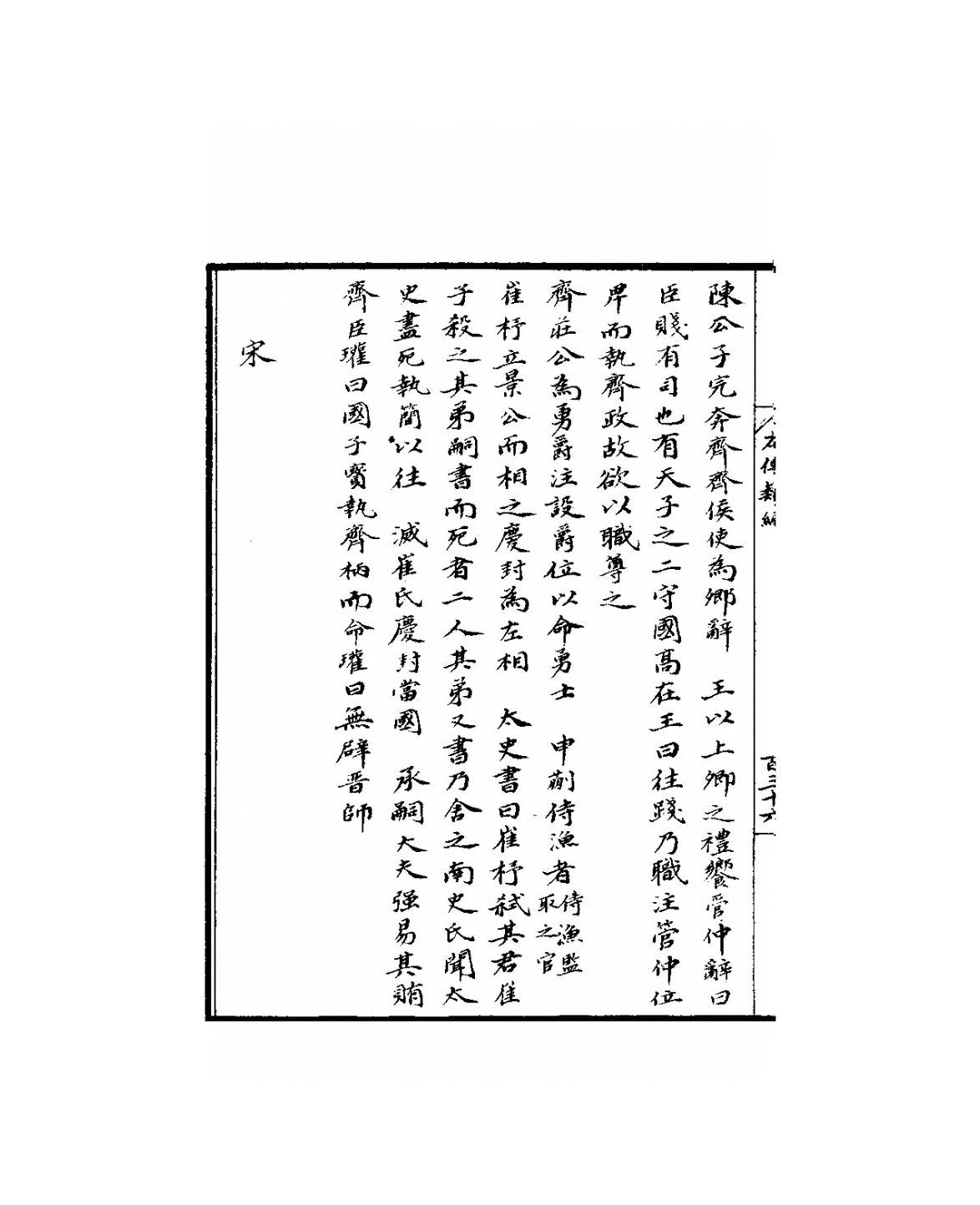
The powerful minister Cui Zhu assassinated Duke Zhuang of Qi. According to the customs of the time, a historian was required to record the details on bamboo slips — who killed him, why, and where.
The first historian stepped forward and wrote: "Cui Zhu murdered his lord."
Cui Zhu demanded he change it. The historian refused.
The sword fell. The first historian fell with it.
The second historian stepped forward. He saw the bloody character left by his brother on the bamboo slip, paused silently, and wrote the same five characters.
The sword fell. The second historian also fell.
The third historian stepped forward. He stepped over the bodies of his two brothers; the bloodstains on the bamboo slip were not yet dry. He took a deep breath and continued to write: "Cui Zhu murdered his lord."
The sword fell. The third historian fell again.
The fourth historian stepped forward.
Cui Zhu's men raised their swords again.
This time, looking into the calm and resolute eyes, Cui Zhu called it off himself.
This last historian was the youngest brother of the Qi State Tai Shi. He and his three brothers were the earliest martyrs in Chinese history who resisted the violence of power as "recorders."
Two hundred and seventy years later, another who held the position of grand historian made the same choice in a similar dire situation.
I. The Memory of Civilization and Its Guardians
If we imagine ancient China as a great living organism extending over thousands of years, then the historian is its oldest "memory hub."
The concept of this design was extremely advanced: power belongs to power, memory belongs to memory. Historians were not responsible for praise, only for recording accurately. No matter how ugly the truth, it must be preserved completely — for only then can future governors draw on the experience to avoid repeating past mistakes.
It was only much later that the West developed a similar spirit: Thucydides wrote 'The History of the Peloponnesian War' after the plague in Athens, and Tacitus secretly wrote 'Annals' under the shadow of tyranny. But the tradition of Chinese historians predated them by at least five hundred years and formed a complete system — a true "collective memory," with every feudal state having its own historian, forming a network that covered the entire civilization.
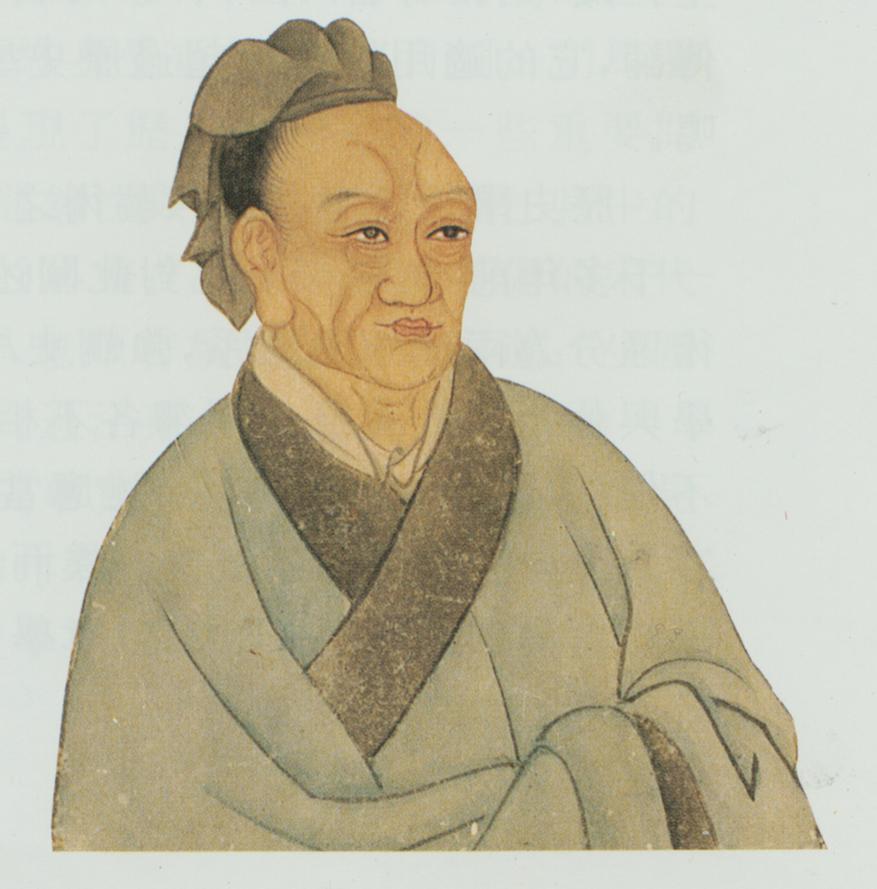
Sima Qian's father, Sima Tan, was a node in this network. His entire life was dedicated to compiling history for the Han Empire, but he did not fulfill his wish. On his deathbed, he called his son to his bedside and uttered an admonition passed down through the ages:
"After I die, you must become the Historian. Do not forget what I wished to write about."
At that moment, Sima Qian knelt by his father's side and made a promise. What he did not know was what price this promise would require him to pay.
II. The Calamity of Li Ling: When the Recorder is Engulfed
99 BC, Sima Qian had completed most of the draft of 'Records of the Grand Historian.' As the historian, his life seemed settled — until that war.
General Li Ling led five thousand infantry into the desert and encountered the Xiongnu main forces. Reinforcements were endlessly delayed, and nearly all the soldiers died. Li Ling was forced to surrender.
When the news reached Chang'an, Emperor Wu of Han was furious. None of the military officials dared to defend Li Ling — in this empire, "dying in battle" was the only correct option, and "surrendering" meant betrayal of the entire nation's loyalty.
Only one person stepped forward.
Sima Qian stood up and spoke a few fair words for Li Ling. He did not believe Li Ling was without fault but thought the crime was not so severe; he did not know Li Ling but could not watch a general who bled for the empire be crushed in public opinion.
Emperor Wu of Han listened — but in another sense.
Sima Qian was thrown into prison and sentenced to death.
At that time, there were two ways to avoid death: one was to pay, the other was to accept castration.
Sima Qian had no money.
He chose castration.
This is one of the most famous "choices" in Chinese history. But few realize that behind this choice is not just physical pain but a civilization's paradox:
When the "recorder" himself becomes the subject of the record, how should he choose?
If he were to die, his 'Records of the Grand Historian' would never be completed. His father's deathbed wish would become empty words. Decades later, no one would remember that forgotten family of historians, just as they do not remember the three brothers of the Qi State Grand Historian.
But if he lived, bearing humiliation, living as a "eunuch," how would he face his writings? How could a broken person record a complete empire?
Sima Qian wrote that famous self-confession in 'Letter to Ren An':
"People naturally die; some deaths are as heavy as Mount Tai, others are as light as a feather."
He chose to live. Not for survival, but for that unfinished "Annals."
III. Two Deaths, One Choice
The story of the four Qi State historian brothers and Sima Qian superficially appears to be a choice between "death and recording."
But upon closer examination, there are subtle differences.
The historian brothers faced an "instant death" — the first three brothers chose death, carving five characters with their blood on bamboo slips. This was an extreme, unreserved martyrdom.
Sima Qian faced a "slow death" — to write, he had to endure humiliation and then write; not to write meant immediate death with dignity. He chose to live and used every remaining day of his life to complete that "Heavenly Book."
One proved the value of recording with death, another with life.
They are two sides of the same coin.
Interestingly, the historian brothers' "death" was not in vain — Sima Qian recorded this story in 'Records of the Grand Historian - House of Duke Tai of Qi,' enabling us to remember those who bravely faced their fate more than two thousand years later.
And Sima Qian's "living" was not in vain — 'Records of the Grand Historian' became China's first general history in annals-biographical style, from the Yellow Emperor to Emperor Wu of Han, covering over three thousand years, becoming the model for all subsequent official histories.
This is the power of "collective memory": the sacrifice of individuals will be remembered by history and transmitted through history to strangers centuries later.
IV. The B-side of Memory: When the Recorder Himself Is Forgotten
But we must also admit that this transmission system is not always effective.
Sima Qian's 'Records of the Grand Historian' was not officially recognized during the Han Dynasty and was even once listed as a banned book. Ban Gu evaluated it in Han Shu as "its right and wrong are somewhat contrary to the holy teachings," meaning its values did not quite align with Confucian orthodoxy.
More cruelly, the story of the historian brothers itself is only briefly mentioned in official history. We do not even know their specific names, only that they were the "Qi State Grand Historian" and his brothers. Sima Qian recorded the event but did not provide detailed annotations.
Why?
Perhaps because the recorder himself is often the first to be forgotten. Their job is to ensure others are remembered, not to ensure they are remembered.
This is a profound paradox: those who most need to be remembered often care the least whether they are remembered.
Like an elder with oral traditions, carrying the stories of their life without boasting about their contributions. Once they pass away, the entire memory library may face a rupture — but before it breaks, no one realizes their existence.
V. Epilogue: Everyone is a Historian
Today, we no longer use bamboo slips.
We use books, images, digital archives. Theoretically, no truth should be "erased" — because someone is always recording it in different places.
But is it really so?
Think: how many histories are being forgotten? How many stories are disappearing where we cannot see them? How much of the spirit of the three historian brothers of Qi is quietly passed down in a corner of this age?
Sima Qian's words written two thousand years ago still resonate today:
"To explore the relationship between Heaven and Man, to comprehend the transformations from past to present, and to create an individual account."
This is not a historian's manifesto, but a "civilization guardian's" declaration.
He tells us: recording itself is a form of resistance. Resistance to forgetting, resistance to distortion, resistance to those who attempt to start everything anew.
In this sense, we all are historians.
The words we write every day, the photos we take, the fragments we leave behind, are all "archiving" our era. They may become the "bamboo slips" for future generations studying our times.
What will you record?
How will you record it?
When your "moment of choice" arrives, will you write down the truth like the three historian brothers, or choose silence?
These questions have no standard answers. But the stories of Sima Qian and the three historian brothers remind us: Recording has a cost, but the cost of forgetting is greater.