I
In 1644 AD, on Coal Hill in Beijing, an emperor ended his life with a rope.
In the same year, in Westminster Palace in London, Charles I was heading to the execution ground; in Paris, the twenty-year-old Louis XIV had just begun his personal rule; and in the Gu family in Kunshan, a twenty-one-year-old young man was packing his bags.
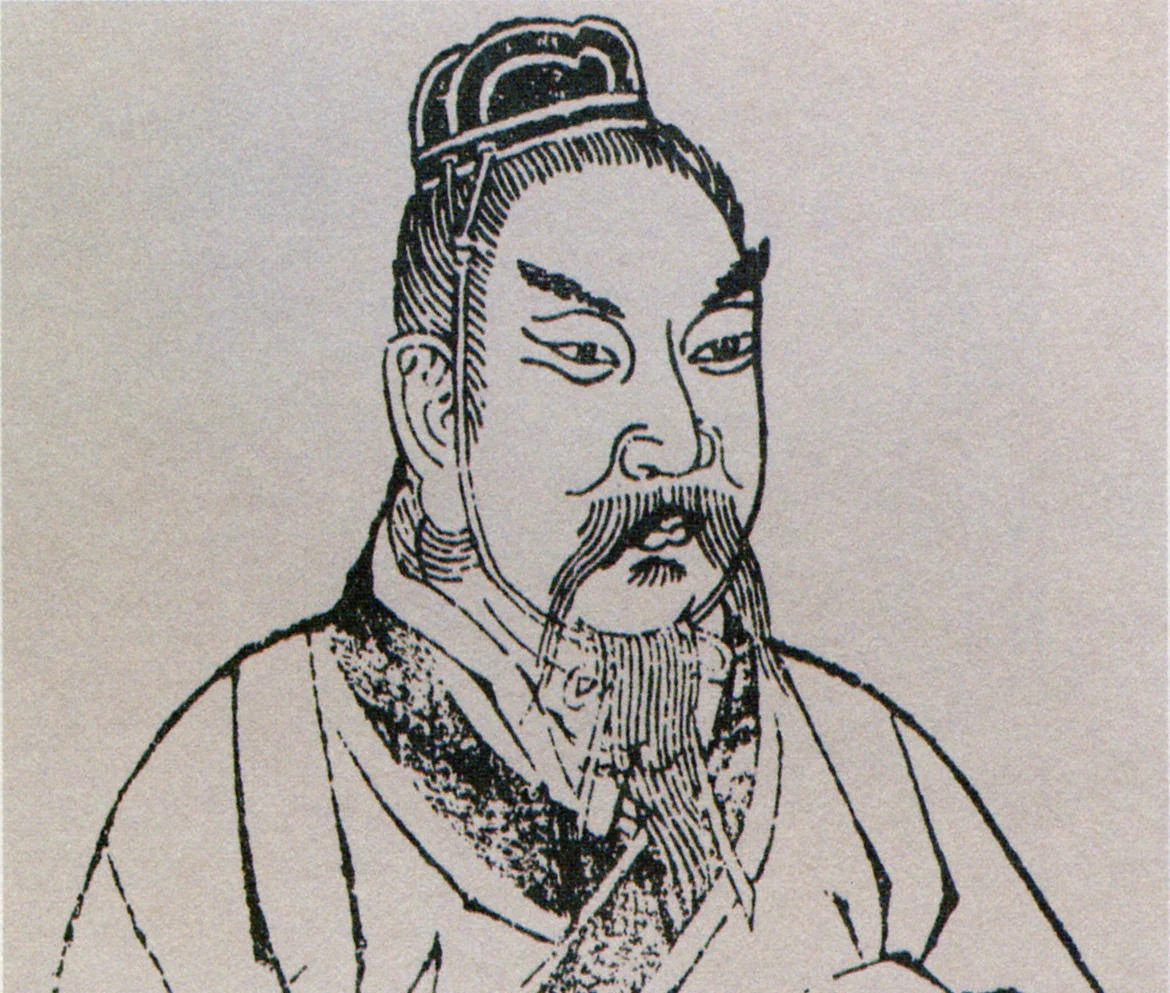
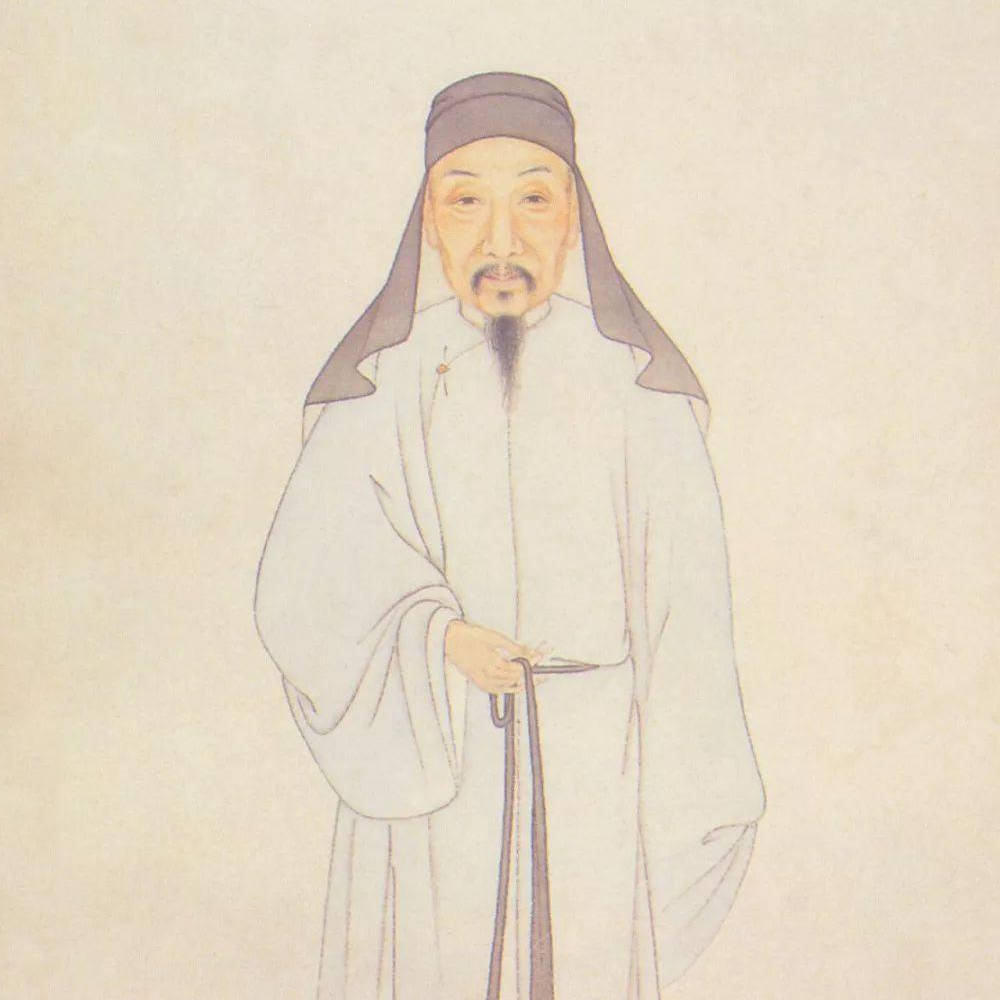
His name was Gu Yanwu. That day, he lost his emperor. But he did not choose to be buried with him, nor did he choose revenge—he chose to respond to this civilizational collapse in another way: measuring the land with his feet and recording society with data.
When a system completely collapses, what can an ordinary person do?
Three hundred and eighty years ago, Gu Yanwu gave an answer. This answer resonates across time and space with anyone today who faces complex problems and tries to find solutions.
II
Gu Yanwu was born into a typical scholarly family in Jiangnan. His grandfather, Gu Ji, was a county school instructor, and his family had a rich collection of books. In theory, he should have followed a standard path of "studying-imperial examination-officialdom."
But before his death, his grandfather said to him: "Don't just memorize the Eight-legged essay, go and see the real world."
This sentence was considered heretical in the official circles at the time. The imperial examinations tested the precise recitation of the Four Books and Five Classics, which was "speaking on behalf of the sages," which did not allow for individuality or independent thinking. The entire value of scholars lay in writing articles that conformed to the standard answers, in speculating on the emperor's wishes and catering to the examiners.
Gu Yanwu listened. At the age of twenty, he began to do something that seemed strange at the time: systematically reading "non-mainstream" books—history, geography, water conservancy, military science, economics, everything that was not tested in the imperial examinations.
In the year he turned twenty-one, the Jia Shen Incident broke out.
He was experiencing a double disaster of plague and drought in Laizhou, Shandong. The roads were full of starving people who had died, the local government was completely paralyzed, and the scholar-officials were talking about "loyalty to the emperor and serving the country" over wine. No one cared about the common people who were dying, no one thought about why all this was happening, and no one thought about what they, as scholars, could do for this land.
Gu Yanwu wrote in Record of Daily Knowledge:
"There is the fall of a state, and there is the fall of All Under Heaven. What is the difference between the fall of a state and the fall of All Under Heaven? I say: changing surnames and changing the reign title is called the fall of a state; when benevolence and righteousness are filled with evil, and it comes to the point of leading beasts to eat people, and people will eat each other, that is called the fall of All Under Heaven."
Translated into vernacular: Changing dynasties is just changing the boss, which is called "the fall of a state"; but if the core values of a society collapse and people start eating people, that is called "the fall of All Under Heaven."
What's the difference? "The fall of a state" is a political issue, and "the fall of All Under Heaven" is a civilizational issue.
The emperor can be changed, but civilization cannot be broken. This is the first thing that Gu Yanwu figured out in 1644.
III
The second thing he figured out was "who should be responsible."
The traditional Confucian logic is: the world belongs to the emperor, and the common people are "subjects" who are only responsible for obeying. Scholars do have some responsibility, but that responsibility is also to the emperor—the core is still the word "loyalty."
Gu Yanwu overturned all of this.
He proposed: "Protecting All Under Heaven, even the humblest commoner has a responsibility."
Translated into today's words: Protecting this civilization is not only the responsibility of the emperor and officials, but every ordinary person has a responsibility.
This was earth-shattering at the time.
Imagine: In the mid-seventeenth century, the Westphalian system was taking shape in Europe, and the concept of sovereign state had just been born; in Germany, the Thirty Years' War had already caused 8 million deaths, equivalent to one-third of the population; and in Jiangnan, China, a scholar said the sentence "Everyone is responsible for civilization."
This is not "loyalty to the emperor," this is the prototype of "civic awareness."
If we use today's language to compare: If an online service crashes, it is not only the operations and maintenance that are responsible, the development is responsible, the product is responsible, and the testing is also responsible—everyone is part of the system, and everyone's negligence may lead to an overall collapse. Gu Yanwu did not have the word "system," but he saw the same truth: society is a whole, and no one can stay out of it.
IV
After figuring out these two things, Gu Yanwu made a decision: to investigate this society himself.
Starting at the age of forty-five, he spent twenty-seven years visiting most of China, including Shandong, Hebei, Shanxi, Shaanxi, Jiangsu, and Zhejiang. Not sightseeing, but doing fieldwork.
What did he record in each place?
Climate. He recorded the rainfall, frequency of disasters, and changes in grain production in each prefecture.
Taxes. He recorded the tax system, actual collection, and grey income of officials in each county.
Water conservancy. He recorded the course of rivers, the condition of dams, and the efficiency of irrigation systems.
Prices. He recorded the changing trends of rice, salt, and cloth prices, and the impact of these changes on ordinary people.
The logic behind what he did is the same as today's "using data to drive decision-making." Instead of writing eight-legged essays and flattering the emperor in the court, he ran to the grassroots to collect real information, trying to understand why the system was going wrong.
Twenty-seven years later, he compiled a book: A Record of the Advantages and Disadvantages of All the Prefectures and Kingdoms Under Heaven.
Note the title of this book. Not "governance and chaos," not "the art of the emperor," but "advantages and disadvantages"—benefits and pains. What he cares about is not power struggles, but whether the people on this land are living well.
This is the first systematic "national conditions white paper" in Chinese history. One hundred and fifty years earlier than the first census in the United States in 1790.
V
Some people may ask: Is what Gu Yanwu did useful? What did he change?
In the short term, he didn't change anything. The Qing Dynasty continued to close its doors to the world, the imperial examination system continued to imprison thought, and China experienced a difficult transition in the following two hundred years.

But in the long run, his ideas are like a seed.
More than a hundred years later, scholars such as Dai Zhen, Gong Zizhen, and Wei Yuan began to reflect on "practical application of knowledge" and began to pay attention to the suffering of the people at the bottom. Later, Liang Qichao reactivated the sentence "Everyone is responsible for the rise and fall of the world," making it a spiritual resource for modern transformation.
Later, the Xinhai Revolution, the May Fourth Movement, and the Anti-Japanese War—in every change, countless ordinary people stood up to take responsibility. Those ordinary people who risked their lives to protect the cultural relics of the Forbidden City, those ordinary people who defended the country with their flesh and blood in the Anti-Japanese War, those ordinary people who chose to help each other in the face of disasters—they may not have read Gu Yanwu's books, but behind their choices stood the same logic:
The world is not the emperor's alone, it is everyone's world.
VI
Back to the question at the beginning: When the system crashes, what can ordinary people do?
Gu Yanwu's answer is: Don't wait for heroes, become the person who repairs the cracks yourself.
This is not a beautiful slogan. He proved that he was serious with twenty-seven years of walking and more than one hundred thousand words of notes.
Gu Yanwu did the same thing, but he faced a larger system—society.
Three hundred years ago and today, technology is changing, systems are changing, but some problems are constant: when a bug appears in the system, who will fix it? How to fix it? Gu Yanwu chose to investigate, record, and analyze in person. People of every era are looking for their own ways.
This is probably the modern meaning of "Everyone is responsible."
Not a grand narrative, not an empty slogan, but at every specific moment, taking on the responsibility that one can bear.