Reporting to the Past: An Ultimate Romance Spanning Millennia
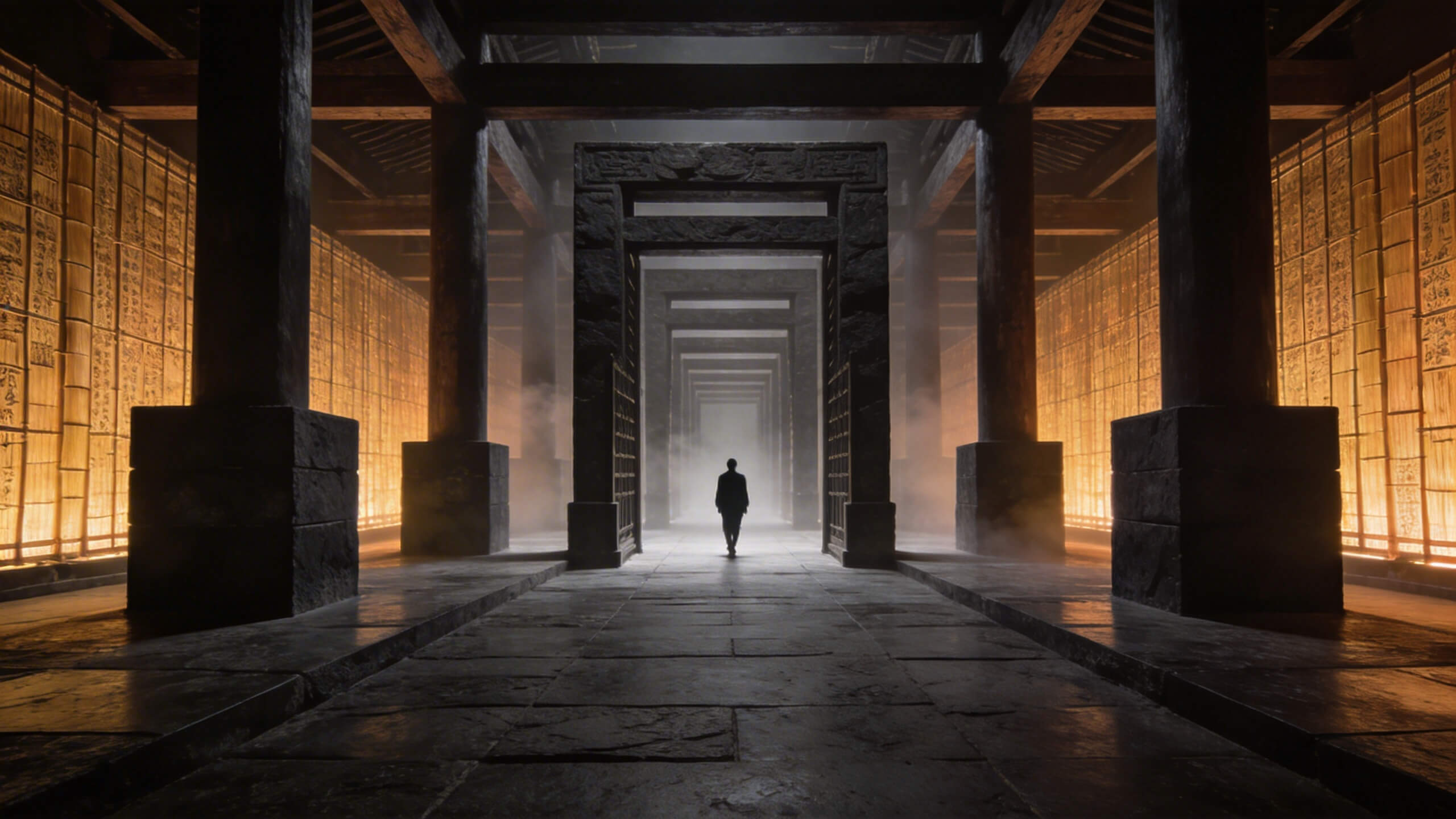
"On the day the imperial army reclaims the Central Plains, do not forget to tell your father in the family sacrifice." This impulse to report back across millennia still beats within our numbering systems, bullet-screen culture, and abandoned bases. It is not sentimentalism, but the hardcore logic of a civilization refusing to let history become past tense.
"Romance" in most contexts points to a present tense: two people, a moment, a reckless flutter of the heart.
But on the Chinese internet in recent years, a recurring phrase—"the ultimate romance of the Chinese people"—points to something almost orthogonal to the above definition.
It does not occur between lovers, is not confined to the present moment, and even transcends the barrier between life and death. It is a report-back spanning centuries: letting successors fulfill the long-cherished wishes of pioneers, letting the living deliver news of victory to the departed. This contract was never put into writing, yet spontaneously takes effect in the tacit understanding of each generation: as long as the story is not finished, someone will always return to keep the appointment.
Of course, romance across time is not unique to China. NASA's Cassini plunged into Saturn's atmosphere before its fuel was exhausted, completing a twenty-year scientific mission, and the world fell silent before their screens at that moment; to verify Einstein's century-old prediction, humanity built gravitational wave detectors with arm spans of four kilometers, waiting half a century for a 0.2-second signal. These are all moving cross-temporal appointments.
But the Chinese version has a subtle difference: It is not to prove a theory, nor to complete an exploration—it is to "report back." An impulse, tinged with the undertones of sacrificial culture, to report to the departed. Scientists cross time for knowledge, while the Chinese cross time, often to say to someone no longer present: "The task you entrusted is done."
This impulse has an ancient source. Over eight hundred years ago, the Southern Song poet Lu You wrote a dying poem: "On the day the imperial army reclaims the Central Plains, do not forget to tell your father in the family sacrifice." — When the Central Plains are recovered, do not forget to tell me during the sacrifice. A dying man's last thought was not about his own afterlife, but a request to his descendants: see the outcome for me, then come back and report. This is perhaps the most precise, most widely circulated poetic distillation of this cultural impulse of "reporting to the departed."
And if we shift our gaze from poetry to the present, we find this impulse has not dissipated, but repeatedly plays out in unexpected ways.
This is not sentimentalism. If we closely examine these events termed "ultimate romance," they share an extremely rational underlying structure: a civilizational logic that views history as an unfinished dialogue.
Keeping the Appointment
In the 1880s, the Qing government's Beiyang Fleet dispatched young sailors far away to Newcastle, England, to supervise the construction and receive warships. Five of these young men—Yuan Peifu (from Rongcheng County, Dengzhou Prefecture, Shandong), Gu Shizhong (from Lujiang County, Luzhou Prefecture, Anhui), Lian Jinyuan, Chen Chengkui (from Min County, Fuzhou Prefecture, Fujian), Chen Shoufu (from Houguan County, Fuzhou Prefecture, Fujian)—never returned. They died in a foreign land, buried in the wind and rain of St. John's Cemetery. Those tombstones stood silent in England's rain and mist for over 130 years, almost completely forgotten by time.
Until June 2022, when China's third aircraft carrier, the "Fujian," was officially launched.
Just days after the launch, a Chinese linguistics student studying in the UK hurried to Newcastle. He originally thought he was the sole messenger, carrying specially requested, laminated waterproof photos of the "Fujian" and "Nanchang" ships.
But when he entered the ancient cemetery, he saw a heart-stirring scene: before those Victorian bluish-grey tombstones, flowers, Chinese national flags, and various carefully laminated images of modern warships—the Liaoning, Shandong, and Type 055 destroyers—were already placed. Before him, many unknown fellow Chinese had spontaneously come, using images of modern heavy industry to turn this isolated overseas cemetery into a naval parade ground.
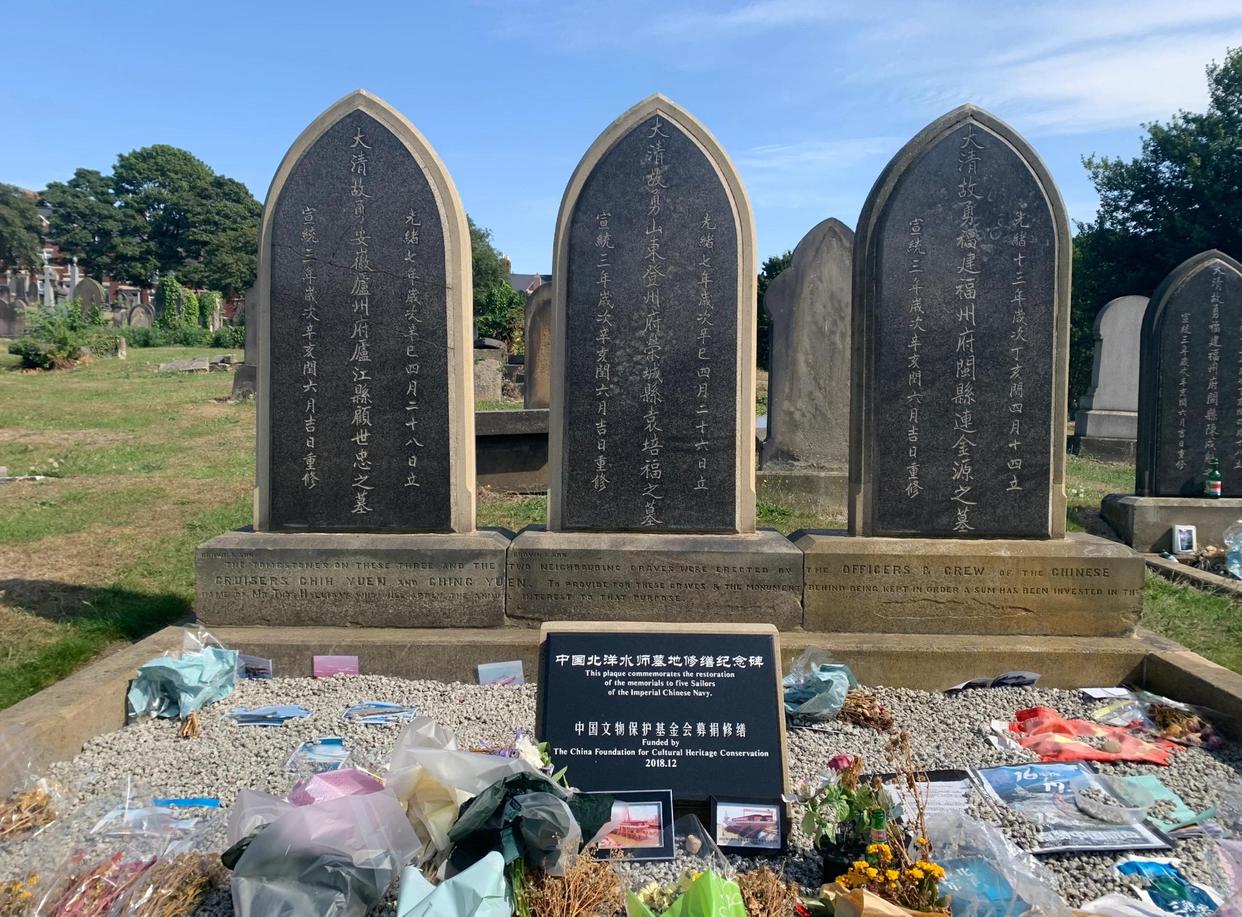
Silently, before the tombstones, they conveyed the same message: "Back then you went to England to buy warships. Now our warships have been launched. Look."
The logic of this action needs to be unpacked. Those students had no blood relation to the Beiyang sailors, no organizational orders, no interest connection. What drove this action was an extremely unique historical view: the sailors' mission—"to obtain reliable naval power for China"—did not end with their deaths. The mission was still running, only the executors changed generation after generation. When a new ship was launched, the current executors naturally had the obligation to go back and inform the original executors: mission accomplished.
This is not a display of nationalist passion. It is the tacit understanding across time among members of a civilization that views history as an ongoing process—I don't know you, but I know we are doing the same thing. Your part is unfinished, I will take over. After completion, I will report to you.
This is another meaning of "keeping the appointment": not two lovers meeting at a café, but strangers from different centuries within a civilization, tacitly agreeing on a promise not yet fulfilled.
Number Sixteen
This logic of keeping appointments exists not only in spontaneous folk actions but also secretly beats within the system's numbering.
China's first aircraft carrier, the Liaoning, hull number 16. Then Shandong 17, Fujian 18. A seemingly mundane technical question emerges: Why start from 16? Where did 1 to 15 go?
About this number, several vastly different yet self-consistent explanations circulate.
The technical version holds that the Liaoning's predecessor was the Soviet "Varyag," and the long years and reconstruction process from its purchase in 1998 to formal delivery in 2012 determined the choice of this number.
The institutional version points out that naval hull number assignments have their own interval logic, and aircraft carriers, as a special ship type, follow a set of administrative sequence rules for their starting number, 16 being a number conforming to the system.
But the version most widespread and emotionally impactful on the Chinese internet is: 1 to 15 are reserved for the Beiyang Fleet. Dingyuan, Zhenyuan, Zhiyuan, Jingyuan, Jingyuan, Laiyuan, Jiyuan, Pingyuan, Chaoyong, Yangwei... those warships sunk or captured in the Sino-Japanese War of 1894, their seats will never be overwritten. That is not decommissioning, but permanent listing—the ship is sunk, but its number endures.
This folk narrative has never been officially confirmed. But it is worth pondering: Why do the masses, faced with the first two rigorous technical and administrative explanations, spontaneously, overwhelmingly lean towards the third sacrificial legend?
Because the first two versions explain "how the number came about," while the third version accommodates "who has not yet arrived." People need not only a reasonable numbering but also a historical compensation—the need to believe that when this country's most powerful warship entered service, it did not forget those predecessors who sank to the seabed 130 years ago. The reserved spaces in the numbering system are like an extra set of bowls and chopsticks always placed on the dining table: the person is gone, but the seat cannot be removed.
This is perhaps the greatest weight a number can bear: not a sequence, but an epitaph.

The Backflow of Bullet Screens
If the first two stories occur in the physical world—one before tombstones in England, one on the steel plates of carriers—the third story occurs in a cross-temporal digital funeral jointly built by 8.7 million souls.
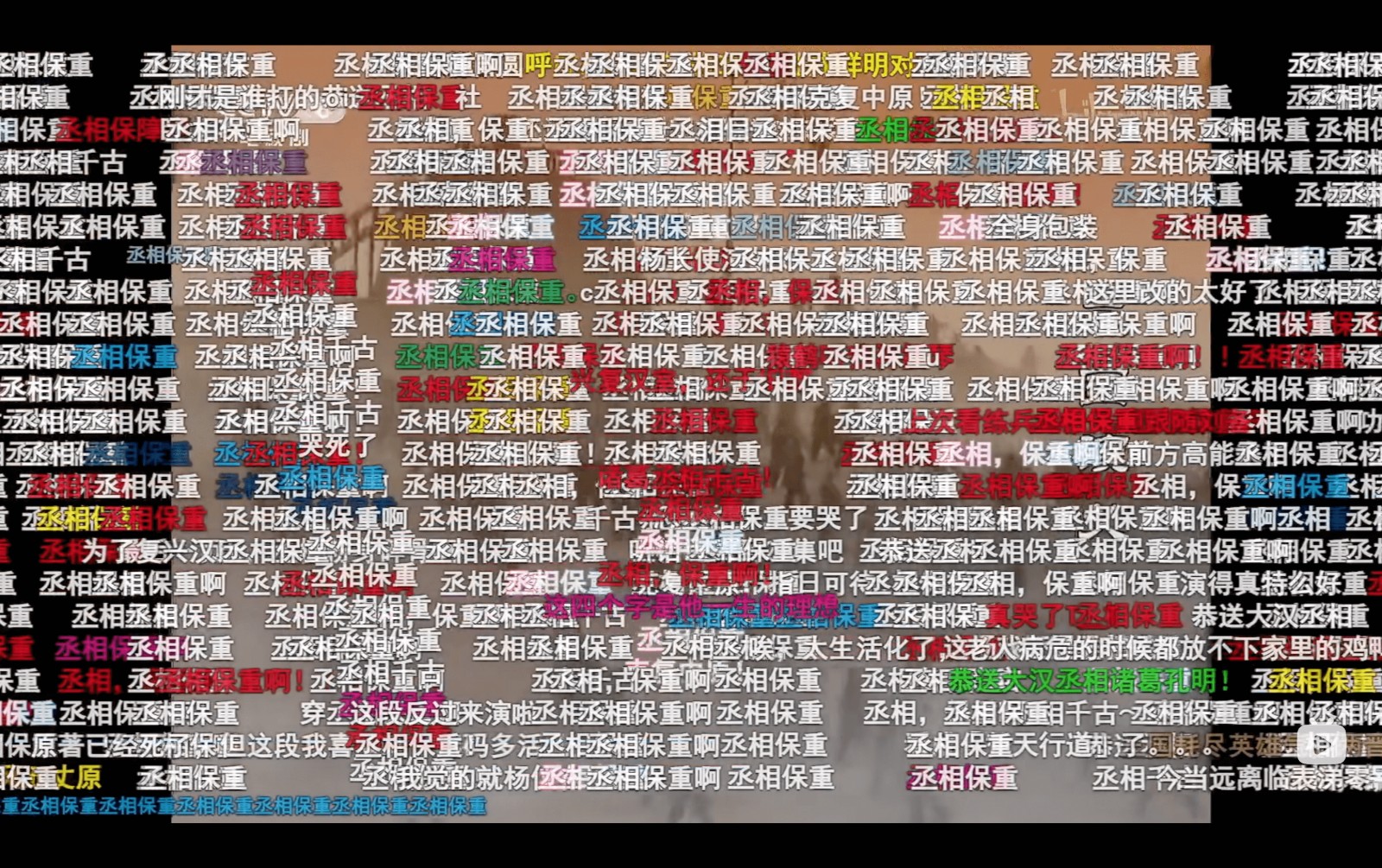
On the set of the 1994 CCTV adaptation of Romance of the Three Kingdoms, to present the scene "Autumn Winds at Wuzhang Plain," the crew mobilized six thousand extras in plain white mourning clothes and scattered an entire ton of spirit money amidst the wind-blown sand. It was an artistic funeral of immense tragic beauty. However, the true "completion" of this funeral occurred thirty years later in digital space.
On Bilibili, when the plot reaches the moment Prime Minister Zhuge Liang's star falls at Wuzhang Plain, the screen becomes completely sealed by dense text. Statistics show this single episode generated over 8.7 million bullet-screen comments, setting the highest record for bullet-screen volume per episode in Chinese TV dramas. And among these over eight million comments, the four characters appearing most frequently, almost forming a visual tsunami, are:
"Prime Minister, take care."
This is a funeral delayed by eighteen hundred years.
This phenomenon is extremely interesting culturally. It is not ignorance, not childishness, not a genuine belief that bullet screens can change history. It is a collective, ritualized "reluctance to accept"—knowing it is impossible, yet still expressing it. And this precisely mirrors the core structure of Zhuge Liang's own life narrative: knowing the Northern Expeditions were unlikely to succeed, he still launched six campaigns.
In form, the senders of bullet screens replicate the behavioral logic of the person they wish to save.
Generation after generation of Chinese people, faced with the impossible, chose the same stance as him. This is perhaps the highest form bullet-screen culture can achieve: the boundary between viewers and characters dissolves, history transforms from an object being watched into a process being joined.
If students visiting the cemetery is a report-back in physical space, then bullet screens are a commemoration in the digital world—the Chinese people's unwillingness to let historical losers be forgotten never diminishes due to changes in medium. Whether placing a laminated warship photo before a Newcastle tombstone or sending a "Prime Minister, take care" bullet-screen comment, the underlying impulse is the same: refusing to let this conversation end.
The Tomb Keepers
The preceding stories—whether students' memorial visits, reserved seats in numbering systems, or reluctance in bullet-screen zones—are intermittent appointments: triggered at special moments, completing a cross-temporal response, then dispersing.
But this civilization also harbors another, more extreme form: someone makes "presence" itself a lifelong task and passes this task to the next generation.
After Genghis Khan's death in 1227, the Darkhad tribe was entrusted to guard his "Eight White Tents"—sacrificial tent-palaces symbolizing his soul. Their duty was to keep the eternal flame lit, conduct daily rituals, and ensure the Great Khan's spirit always had company. This responsibility passed down for nearly eight hundred years, roughly forty generations. Through the fall of Yuan, Ming-Qing transition, Republican-era warfare, Japanese invasion, the Eight White Tents were forced to relocate multiple times, from grasslands to temples, from temples to folk settings. But regardless of regime changes, spread of war, the Darkhad lineage never broke. No salary, no formal position, only an orally transmitted promise. Eight hundred years, the eternal flame never extinguished.
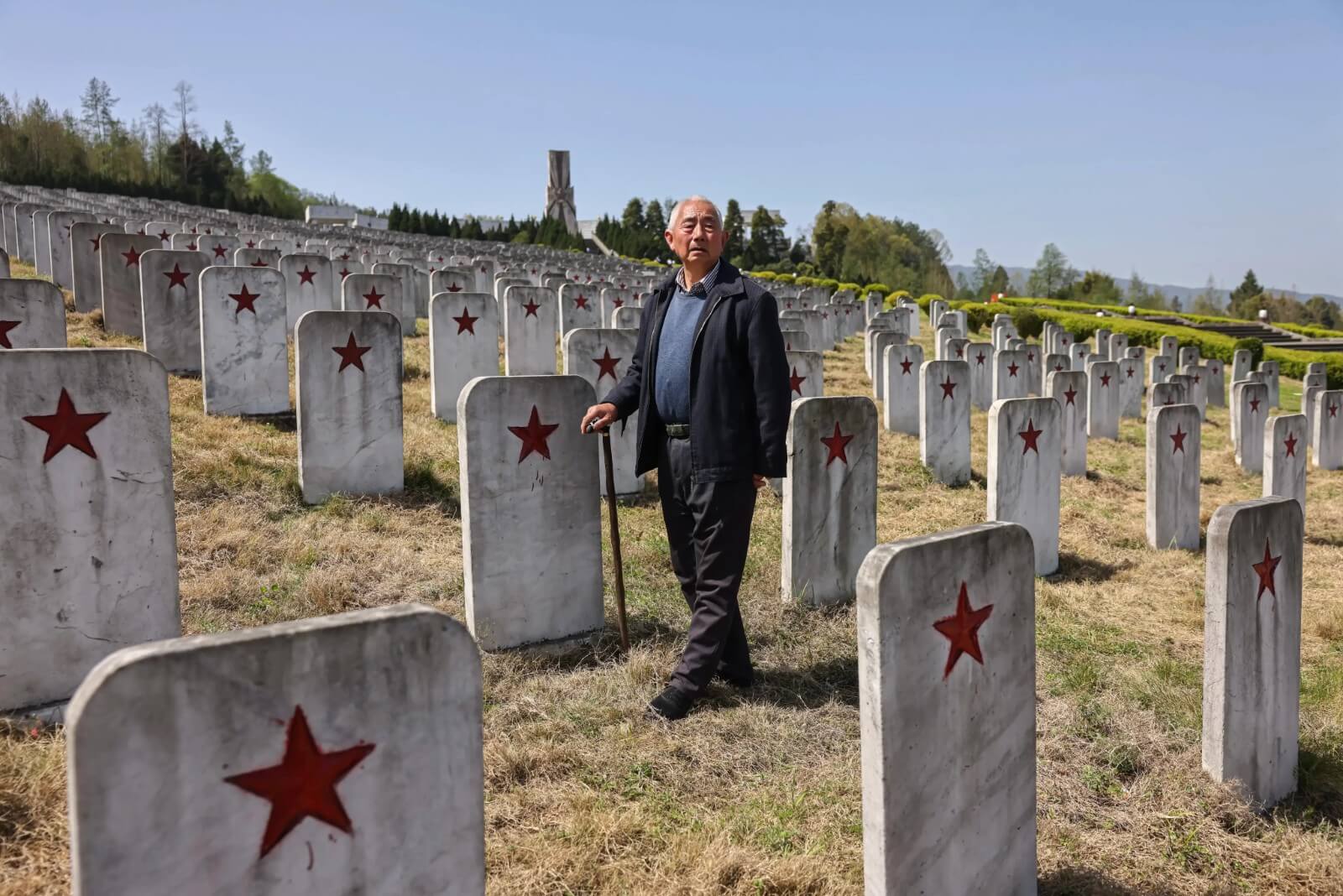
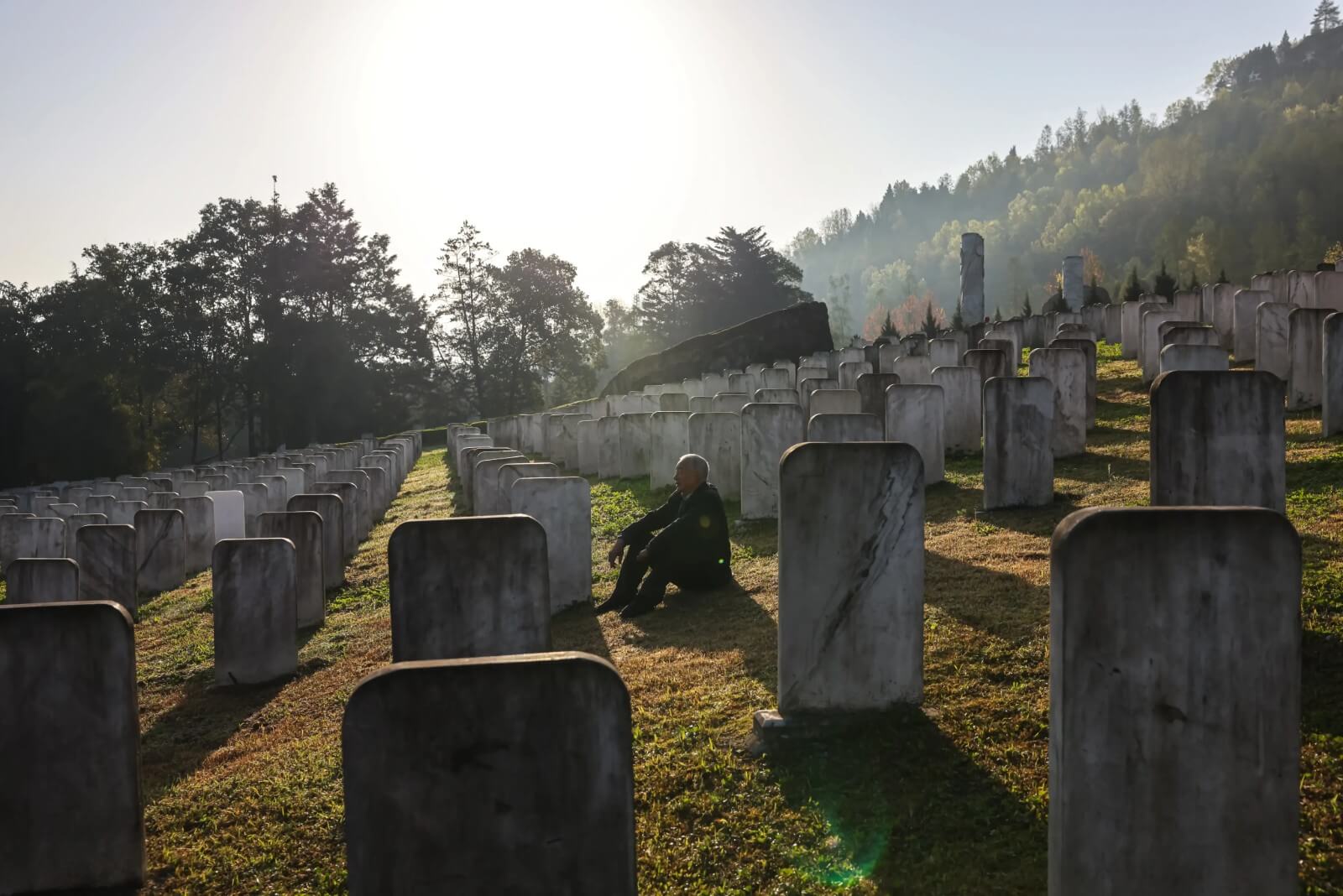
This kind of guardianship also exists in modern and contemporary China, just on a smaller, quieter scale. Scattered in villages across the land are many such people: during wartime, a villager or wounded veteran promised to tend to the grave of a fallen comrade, and this promise, without any legal obligation or material reward, passed to sons, grandsons. Decades later, no one remembers the face or voice of the person in the grave, the tomb-keeping descendant never met the ancestor in the grave, yet they still clean and offer sacrifices on time, as if it were a promise made just yesterday.
The tomb keepers' stories reveal the extreme form of this "appointment." Students going to Newcastle is a one-time report-back—report delivered, task ended. Bullet screens are ritual participation each time the video is replayed—video closed, ritual paused. But tomb keepers are different. Their task has no day of completion, because they guard not a to-do item, but "presence" itself. They are not going to keep an appointment; they are the appointment—a living promise forged with generationally transmitted flesh and blood.
The Lead Wall
The last story has the highest information density and shortest narrative. It was not remembered, but slowly unveiled during a lengthy mission called "decommissioning."
In China's early nuclear industry bases, there were people who worked anonymously. They completed the R&D and testing of China's first-generation nuclear submarine land-based prototype reactor within these isolated factory buildings. That was the origin of China's nuclear power, also an era of "deep diving."
To isolate the lethal radiation from the reactor compartment, the builders of that time had to manually install lead shielding walls as thick as 500 mm on both sides. This was not simple stacking; it involved meticulously fitting and welding heavy lead blocks, ensuring not a single leak while withstanding the surging force of nuclear energy.
Over thirty years later, when this meritorious prototype reactor successfully completed its mission and entered the decommissioning and dismantlement phase. When researchers dismantled to the grid marked "No. 144" on the shielding wall, behind the thick lead plate, a line of red chalk writing quietly appeared:
"Kids, you've worked hard."
These six characters slept silently for over thirty years behind the dark, quiet, high-intensity radiation shield.
The most shocking aspect of this detail is not its serendipity, but its "foresight."
When installing these lead plates, the older generation of nuclear power personnel deeply understood the complexity of this craft, the immense physical exertion. So in that moment, they already foresaw—over thirty years later, when this machine completed its mission, later people dismantling these tightly fitted, multi-layered giant lead plates would inevitably experience the same, perhaps even greater, hardship.
Therefore, before sealing this life-and-death barrier, they wrote this message for this group of cross-temporal, yet-to-meet "kids."
This is an extremely rational romance: I write my concern for you now, and you will receive this letter only decades later, on the day the task is perfectly concluded. The writer set the condition for opening the letter as—"everything is finished, you are safe."
The person who wrote these words knew that as long as the nuclear reactor was still operating, as long as the nation still needed this barrier, these words would never be seen. The only prerequisite for them being read was that, due to your efforts, this machine had completed its historical mission. Its reemergence itself meant "success."
The three characters "辛苦了" (You've worked hard), in Chinese context, are the highest confirmation of a person's sacrifice. They mean: Although you work in darkness, although your name is unknown, every time you gritted your teeth, every time you persevered, was actually seen and felt for by another group of people over thirty years ago.
When this red writing met the light thirty years later, it accomplished the gentlest report-back within a civilization: the predecessor wrote instructions at the starting point, the successor read gratitude at the end point.
A Civilization's View of Time
Placing these stories side by side, a common structure emerges.
They all involve a special temporal relationship: the past is not something already finished, but something not yet completed. The dead are not people who have already left, but people still waiting for a reply. History is not a text to be read, but a dialogue to be joined.
Different civilizations have offered different responses to "impermanence." The core of "memento mori" in Western tradition is acceptance of impermanence—precisely because everything will eventually pass, the present is precious. The core of "mono no aware" in Japanese aesthetics is finding beauty in impermanence itself—cherry blossoms are beautiful precisely because they fall. These are profound and moving answers.
The Chinese "ultimate romance" takes another path: neither accepting impermanence nor aestheticizing it, but refusing to let impermanence be the final verdict.
Students go to the cemetery because the appointment was never canceled. Hull numbers start at 16—whatever the real reason—people choose to believe it's because the preceding seats are taken. Bullet screens fly back against time because viewers refuse to be mere spectators. Tomb keepers give their own lives and descendants' lives to a grave because some "presence" must not be interrupted. Red chalk written on a lead wall appears unexpectedly decades later during dismantling—because after all isolation and forgetting, there are still words to say to those who come after.
This view of time has a civilizational-historical explanation. China is one of the world's extremely few continuous civilizations that never experienced a rupture. When a civilization runs continuously for millennia, its members develop a special historical consciousness—the dead are not "ancients," but "previous colleagues." What they did, what they left unfinished, what they regretted, are all pending items in the current system.
And perhaps the reason this romance is "ultimate" lies not in those grand narratives themselves, but in how it imbues every ordinary participant with a certain sanctity. Those visiting the Newcastle cemetery are just ordinary students, those sending bullet screens are just young people browsing videos late at night, those dismantling the lead wall are just a construction crew unaware of what they would see. But when they are drawn into these cross-temporal dialogues, they are no longer just themselves—they become the newest link on a long rope, connecting all the people in this civilization who could not witness the outcome with their own eyes.
Over eight hundred years ago, Lu You wrote on his sickbed, "Do not forget to tell your father in the family sacrifice." He never received news of the Central Plains being reclaimed. But he left behind a structure: Someone will always see for me, then come back and tell me.
This structure is still operational today.
Therefore, the ultimate romance of the Chinese people is essentially not emotion, but responsibility. Not sentimentality, but handover. Not paying homage to the past, but reporting to the past:
Report, mission accomplished.