The Silent Forest: Those Who Change China Outside the Spotlight
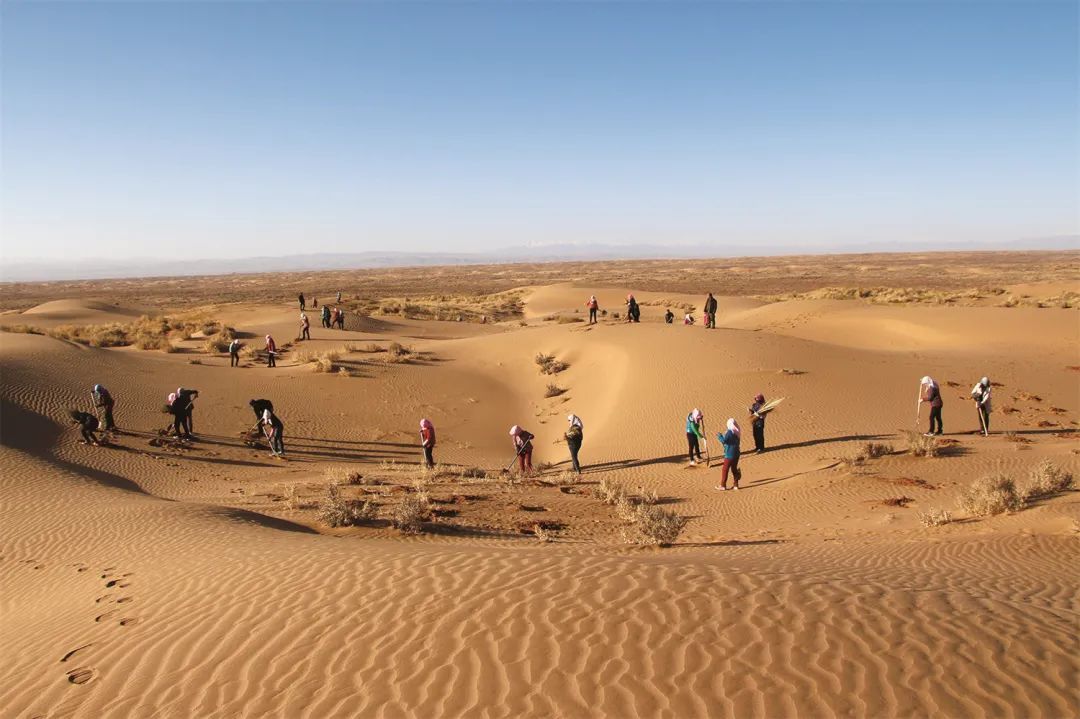
From the Zhangbei Wind Power Base to the greening of the Taklamakan Desert, China is advancing environmental protection through pragmatic actions. By transitioning to clean energy and undertaking ecological projects, the country is achieving both development and environmental sustainability. This is not only China's ecological revolution but also provides an effective path for global environmental challenges.
Introduction: Different Choices of Two Paths
From the half-century artificial forest in Saihanba, Hebei, to the 3,046-kilometer green barrier on the edge of the Taklamakan Desert, China's environmental work is advancing in a pragmatic and steady way. It is not a slogan-driven campaign, but a long-term effort tied to public well-being and intergenerational fairness.
In this age of information explosion, we are often attracted by various "hot searches" and "headlines," to the point of forgetting that the true force that changes the world often hides in those corners not illuminated by the spotlight. The quiet ecological revolution that China is undertaking is the best example.
In Taklamakan, Kubuqi, Tengger, and Maowusu, there is such a group of people: they spend most of their lives fighting with yellow sand, watering pieces of oasis with sweat and blood. They are not politicians, not celebrities, and rarely appear in news reports. They are just ordinary farmers, herders, and workers. But it is these people who have planted billions of trees with their hands and created one miracle after another in China's desertification control history. Understanding their stories leads to understanding the real source of strength in China's environmental undertakings.
Chapter One: The Miracle of Saihanba—From "Sandstorm Overwhelming" to "Forest Oasis"
The Nirvana of a Wasteland
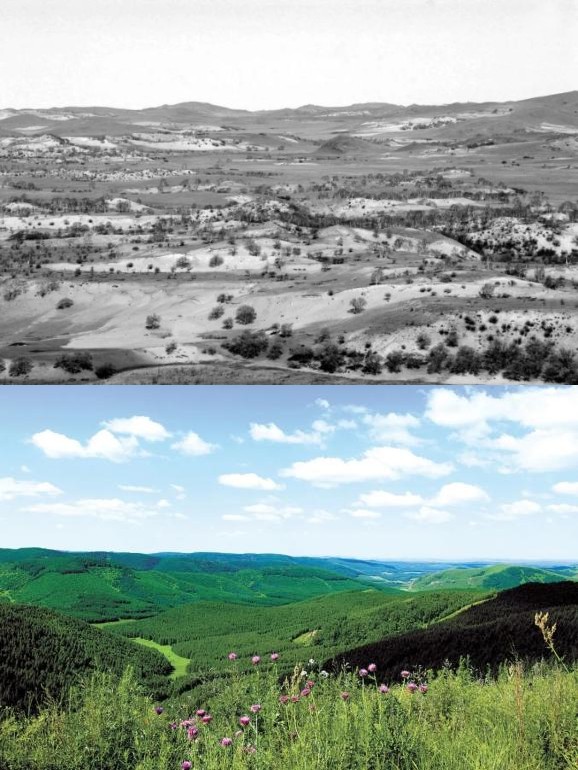
Saihanba, in northern Hebei, was once the famous imperial hunting ground "Mulan Paddock" in the Qing Dynasty. But by the late Qing and early Republican period, years of war, over-cultivation, and deforestation had turned this "beautiful highland" into barren sandy land. By the 1950s, sand activity in and around Saihanba had intensified, affecting farmland and settlements across northern North China. Researchers and local authorities widely warned that without systematic control, regional ecological security would continue to deteriorate.
In 1962, the Saihanba Mechanical Forest Farm was officially established, and 369 pioneers with an average age of less than 24 set out for the high-cold wasteland. What they faced was not scenery, but extreme cold of more than minus 40 degrees Celsius, ubiquitous strong winds, and vegetation that had almost disappeared.
This battle of "turning disadvantages into advantages" lasted for three generations.
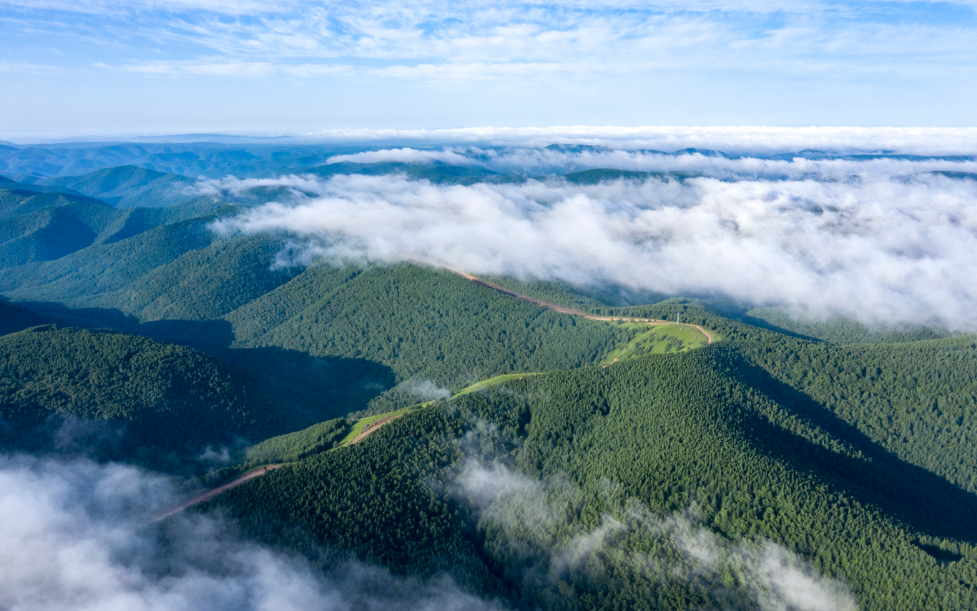
The land became the battlefield. Starting with the perseverance of "One Pine," the people of Saihanba began to find signs of life on rocky hillsides. The severe cold tempered their qualities. After two large-scale afforestation failures, they invented the "horseshoe pit" afforestation method and improved seedling cultivation techniques, allowing the larch to root in the barren sand. The wasteland turned into a barrier. Now, the forest coverage rate of Saihanba has increased from 11.4% to 82%, forming a green wall firmly locking the Hunshandak Sandy Land.
Ecological Dividends Behind the Numbers
The achievements of Saihanba are not just miracles of afforestation numbers; they are also textbooks in ecological civilization construction. This world's largest artificial forest provides invaluable ecological value every year by purifying water, sequestering carbon, and preventing wind and sand fixation for the Beijing-Tianjin area. For local and surrounding residents, this change means a fundamental reshaping of survival logic:
A fundamental reversal of climatic conditions: Previously, Saihanba had over 80 dusty days a year, which has now been significantly reduced. This has not only improved the local living environment but also directly ensured Beijing's air quality and water supply (Saihanba is an important water source conservation area of Hai River's tributaries).
The rise of green industries: Saihanba no longer relies on chopping trees for money but on "watching trees" for wealth. Ecotourism and carbon trading have become new economic growth points. Tens of thousands of people in surrounding areas have achieved poverty alleviation and prosperity by participating in forest protection, running homestays, and ecological picking.
Accumulation of talents and technologies: Three generations of forest builders have accumulated extensive afforestation technology in high-cold areas. These experiences are being promoted to more challenging desertification control frontline areas like Inner Mongolia and Xinjiang. Green is no longer an abstract concept but a massive tangible forest sea, the enduring result of the people of Saihanba dedicated to "contributing youth, lifetimes, and generations."
A Parable: A Pine and a Sea
Imagine, when the strong wind rages over the wasteland, and everyone debates "it's impossible to grow trees here," some people search for the sole surviving "lone pine." They don't blame the ruthless wind but bow down to study how this tree survived. Years later, while those arguing are still treading water, the initial few trees have propagated into an expansive forest sea.
This story illustrates a simple truth: Rather than lamenting the barrenness, it's better to lower your head and plant hope.
Chapter Two: Taklamakan's Green Fence—A Miracle in Human Desertification Control History
A Moving Desert, a Fixed Challenge
The Taklamakan Desert is China's largest desert and the world's second-largest mobile desert. "Mobile" means the dunes constantly move, devouring everything around like waves. For thousands of years, people living on the desert's edge have battled sand and dust—crops planted today may be buried by yellow sand tomorrow; houses repaired today may be overwhelmed by wind and sand.
This difficult living condition is etched in memory. Farmlands on the desert's edge are often covered by yellow sand overnight, forcing villagers to start anew again and again. Wind and sand not only destroy crops but also lead to severe respiratory diseases, especially affecting children and the elderly. Historical records indicate that the Taklamakan Desert has been expanding over the past few decades, continually reducing the surrounding oasis area. Without intervention, as the desert continues to expand, it will turn more farmland into wasteland, forcing more villages to relocate, and causing more people to lose their homes.
The 3,046-kilometer Green Great Wall
In 2024, China achieved a 3,046-kilometer green encirclement of the Taklamakan Desert. This "Green Great Wall" consists of multiple defense lines: the outer layer is a windbreak and sand-fixing forest belt composed of drought-resistant plants like Haloxylon and Tamarisk; the middle layer is an irrigation system that provides necessary water to vegetation through drip irrigation technology; the innermost layer is an economic crop area planting desert plants with economic value, such as Cistanche and Licorice.
The difficulty of this project exceeds ordinary imagination. Planting and maintaining vegetation in extremely arid areas with an annual precipitation of less than 50mm requires resolving a series of difficulties such as water sources, soil, seed selection, and maintenance. Every surviving plant embodies the wisdom and sweat of researchers and local people. This is not just about "planting trees," but a long-term struggle with the natural environment.
The Multilayered Value of the Engineering
The green encirclement brings value in many aspects. Ecological security barrier side, the green encirclement effectively hinders desert expansion, protecting millions of acres of surrounding farmlands and grasslands. For farmers and herders who have lived at the desert's edge for generations, it means they can continue farming and grazing on this land without fearing their home being devoured by the desert. Climate regulation effect, the increase in vegetation cover improves the regional microclimate, increases air humidity, and reduces the frequency of extreme weather. This not only favors agricultural production but also creates a more livable environment for local residents. Biodiversity protection side, as vegetation recovery takes place, the desert edge ecosystem begins to revive. Wildlife has more habitats, and plant species begin to diversify. An area that was once barren is beginning to reawaken. New economic development opportunities, desert greening brings ecological benefits and creates economic value. The plantation of desert specialty plants like Cistanche brings considerable income to local farmers. The rise of ecotourism attracts a large number of tourists to see this "oasis in the desert."
A Parable: The Landlord and the Gardener
A landlord discovered his garden being overtaken by weeds. The servants suggested, "Let's pull the weeds every day!" The steward offered, "Let's plant roses and fruit trees instead; the weeds will naturally diminish." The landlord chose the latter approach. Years later, the garden had no weeds and bore abundant fruits.
So it is with desert control—rather than "fighting" the desert, it's better to "build" an oasis.
Chapter Three: How Hard is it to Make a Tree Survive in the Desert—Those Who Quietly Contribute to Desertification Control
When we talk about Taklamakan's green fence, Kubuqi's desert oasis, and Tengger's desertification miracles, behind these grand narratives lies the persistence and contribution of countless individuals day after day. On the vast desert edges of China, there is a group of ordinary people: they spend most of their lives fighting yellow sand, watering pieces of oasis with sweat and blood. Their stories deserve to be known by more people. Only by understanding these stories can you truly comprehend just how difficult it is to get a tree to survive in the desert.
Shi Guangyin: The First Desertification Control Hero of New China
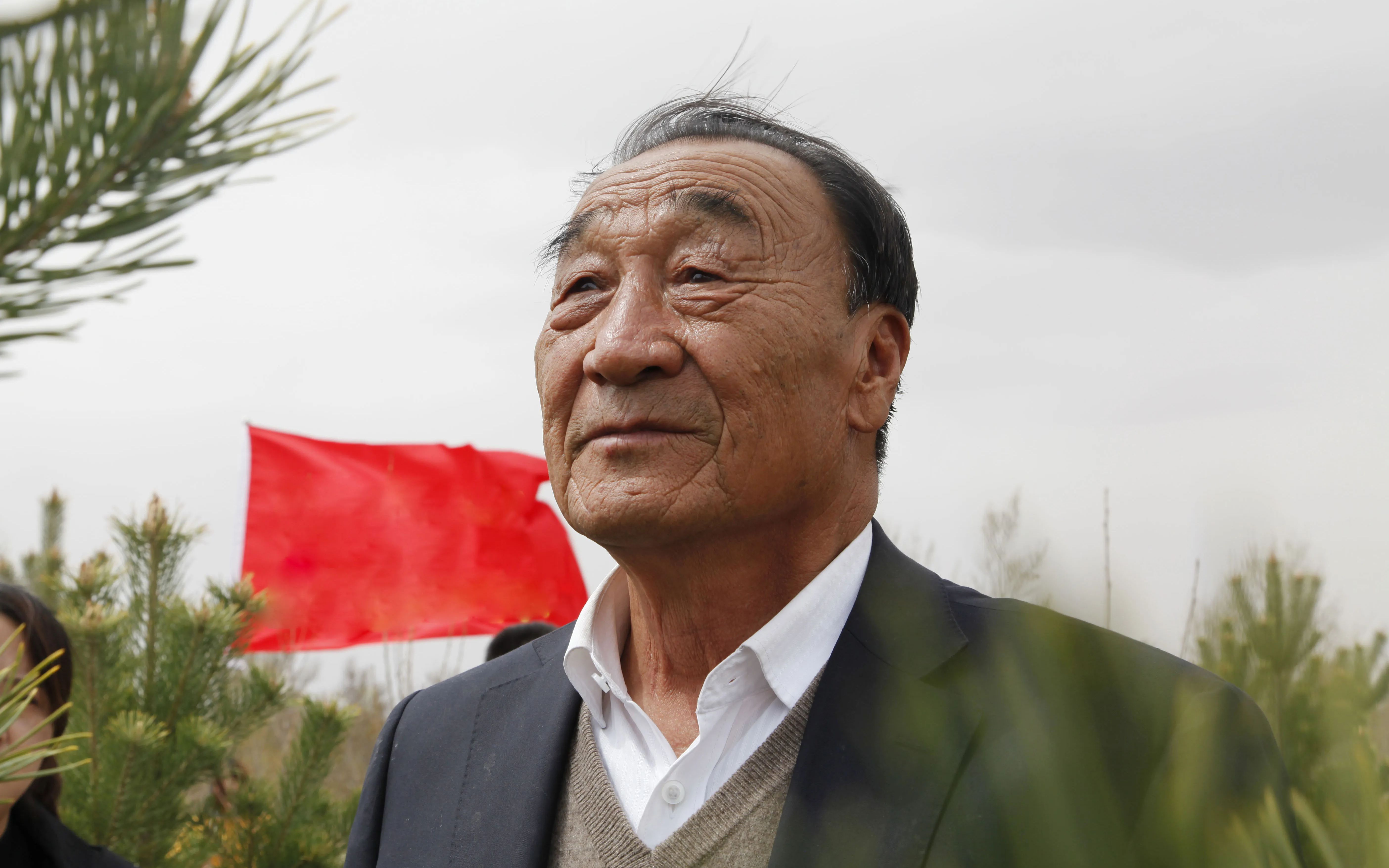
In Dingbian County, Shaanxi Province, there is an old man named Shi Guangyin. Born in 1952, he began battling the desert at the age of 20. That year, he served as a production team leader and made a life-changing decision—to contract barren sandy land for afforestation.
At that time, no one believed he could succeed. The southern edge of the Maowusu Desert had an extremely harsh environment: an annual rainfall of less than 300mm and an evaporation rate of over 2000mm; poor soil, rampant wind, and sandstorms. But Shi Guangyin did not retreat. He led the villagers to begin the long course of desertification control using the most primitive tools—shovel, handcart, water bucket.
The initial difficulties were unimaginable. Without water, they fetched it over long distances; without seedlings, they cultivated their own; without experience, they learned as they went. After planting the first batch of seedlings, a storm almost destroyed everything. But Shi Guangyin did not give up, finding methods in failures and experiences.
Forty years on, Shi Guangyin has managed to control over 25,000 acres of barren land and planted more than 53 million trees. On the southern edge of the Maowusu Desert, he led locals to build a hundred-mile green wall, transforming "desert encroaching on people" to "people advancing into the desert." He pioneered a new "company + farmers + base" desertification control model, turning the desert into an oasis and leading locals out of poverty into prosperity.
In 2002, Shi Guangyin received the "World Outstanding Forest Farmer Award" from the UN Food and Agriculture Organization. He has been warmly received over a dozen times by party and national leaders. In 2021, he received the highest honor of the Communist Party of China—the "July 1 Medal." However, for this old man, what makes him the most proud are not the honor certificates, but the trees he planted in his lifetime—they are still alive, growing, and resisting the wind and sand.
Shi Guangyin often says, "In one's life, you always have to leave something for future generations." What he leaves behind is lush forests, arable land, and grazing pastures, more valuable than any wealth.
"Six Old Men" of Babusha: Three Generations of Desertification Control Relay
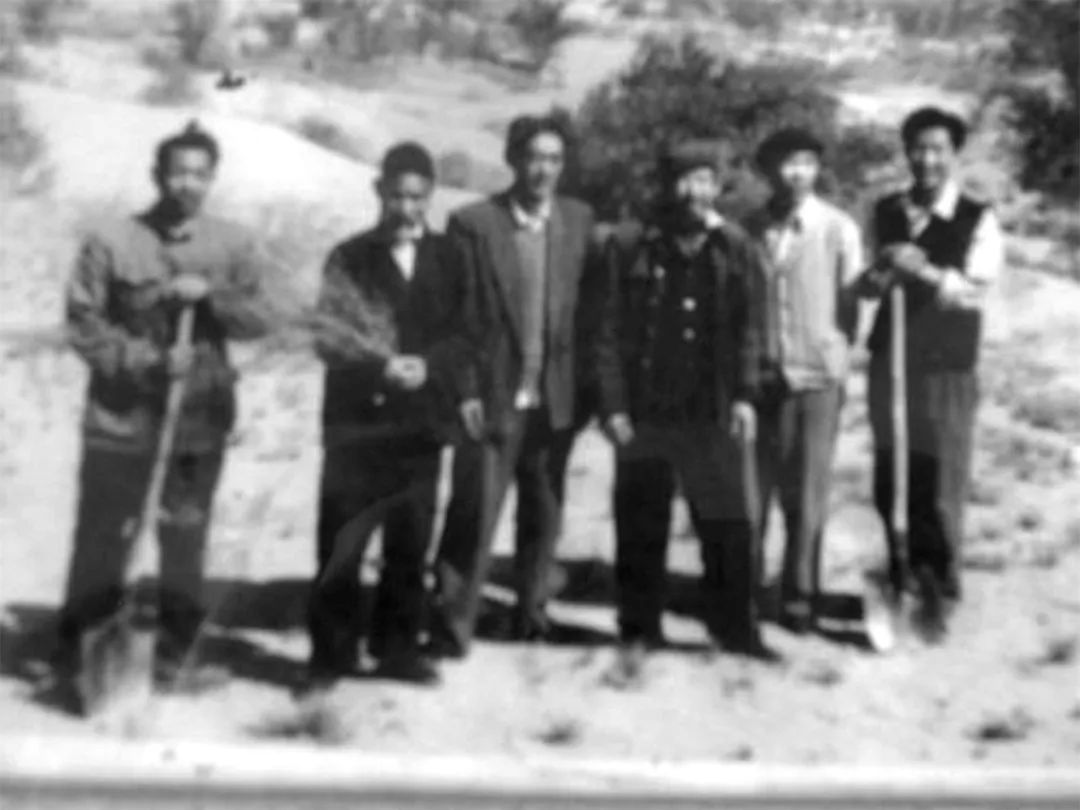
Babusha in Gulang County, Gansu Province, is a wind outlet on the southern edge of the Tengger Desert. Thirty-eight years ago, wind and sand raged here, "sand climbing walls, sheep climbing roofs," the surrounding villages were always in danger of being swallowed by yellow sand.
In 1981, six old men—Guo Chaoming, He Falin, Shi Man, Luo Yuankui, Cheng Hai, Zhang Runyuan—made an astonishing decision to contract and control 7.5 million acres of shifting sand in Babusha. At that time, Guo Chaoming was 61, and the youngest, Zhang Runyuan, was nearly 50. They could have spent their latter years leisurely at home but chose to enter the desert and pursue an almost impossible task.
The conditions for the six old men to control the desert were extremely tough. Without a place to stay, they dug a deep pit in the sand and covered it with grass, using wooden poles as support—this is known locally as "earth hole." Without water, they walked great distances to fetch it. Without seedlings, they cultivated their own. Without experience, they learned as they went. Eating was done with sand blown into the bowl, mosquitoes bit in summer, and winter involved a makeshift heat source of coal blocks placed in a water basin for warmth.
In their first year, they planted ten thousand trees in the desert. Originally capable of surviving seven percent, a storm left less than 30%. Failure did not discourage the six old men. Through exploring failure, they discovered the method of using "one straw to press sand and prevent wind extraction," marking a turning point in desertification control at Babusha.
After more than ten years of tough battle, the six old men irrigated 42,000 acres of desert with sweat. The trees in Babusha greened, but in contrast, the men's heads turned white. In 1991 and 1992, He Falin and Shi Man passed away one after another. Before his death, Shi Man instructed his son Shi Yinshan, "Don't bury me in the ancestral grave; an sand dune blocks the view of the forest. Bury me next to Babusha so I can keep an eye on our continued desert control."
Later, Guo Chaoming and Luo Yuankui also passed away. Today, of the original six old men, four have passed, and two, too elderly, can no longer do the work. But their descendants have taken up the shovel, continuing the desert control efforts. In the second generation of desert controllers are Shi Man's son, Shi Yinshan; Guo Chaoming's son, Guo Wangang; He Falin's son, He Zhongqiang... In 2017, Guo Chaoming's grandson, Guo Xi, joined the forest farm, becoming the third generation of desert controllers.
Over 38 years, Babusha Forest Farm completed desertification and afforestation on 28.7 million acres, with 43 million acres of sand governance and revegetation. The six old men and their descendants, with the spirit of "foolish man moves the mountain," wrote a green chapter from "sand forcing people to retreat" to "people advancing into the sand." In 2019, Babusha Forest Farm "six old men" and three generations were awarded the title "Model of the Times" by the Central Publicity Department.
Zhang Xiwang: Planting Trees in the Desert for 20 Years

In the Kubuqi Desert, there is a farmer named Zhang Xiwang. In 2003, at 45, he began planting trees in this desert. Before that, he was just an ordinary farmer with an annual planting income of 2,000 yuan.
Zhang Xiwang initially chose tree planting for a simple, "realistic" reason—Elion Resources Group recruited people to plant trees in the desert, offering a reward of 20 yuan per person per day. This was a significant income for Zhang Xiwang. But when he truly entered the desert, he found the job was far more challenging than he imagined.
Every day, Zhang Xiwang and the villagers would carry seedlings and walk two or three kilometers to the planting sites, spending three to four hours just walking back and forth. In the desert summer, the scorching sun raised temperatures to forty or fifty degrees Celsius; in winter, the cold wind was piercing, freezing water instantly. More frustratingly, seedlings planted today were often blown away by a strong wind soon after.
In the early years, Zhang Xiwang experienced failures too. Most of the first-year seedlings didn't survive. Standing on a dune and seeing the blown-down seedlings, he indeed felt down. "For the work, you must be pragmatic!" was his often-said phrase. With this tenacity, he repeatedly studied the flow of sand and wind patterns, continuously improving planting methods. He discovered that using wheat straw to create squares and pressing sand effectively prevented wind erosion; planting on the leeward slope of a dune improved survival rates; spring planting was better suited than autumn.
Over 20 years, Zhang Xiwang transformed from an ordinary farmer into a "master-level" tree planter in the desert. The team he led afforested and greened 25,000 acres of the Kubuqi Desert. His story appeared in various media. But for this black-skinned, rough-handed farmer, his greatest satisfaction lies in those waving trees—they are alive and growing.
Wang Yinyi: 'Foolish Man' in the Desert
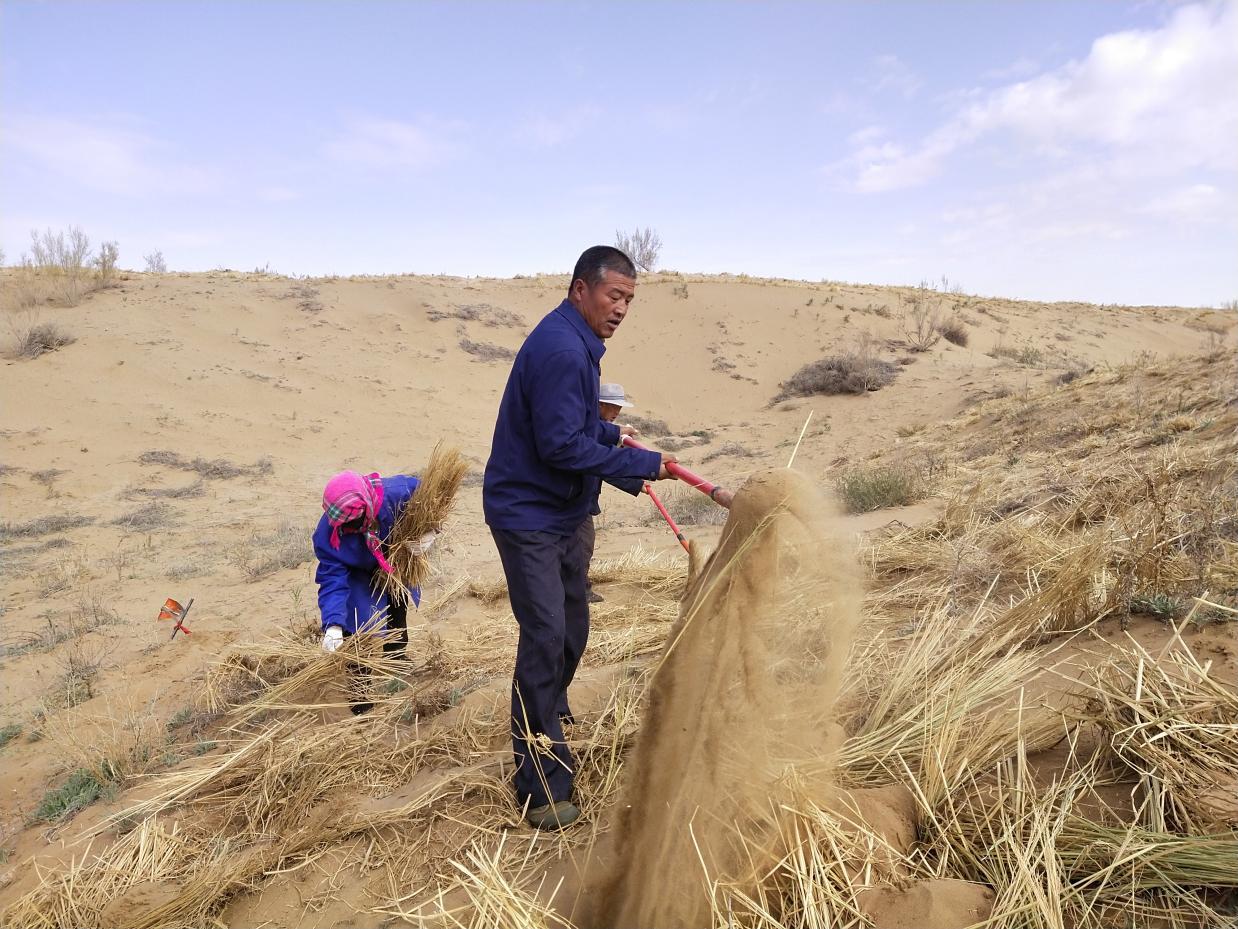
Wang Yinyi of Wuwei City, Gansu Province, is also a "foolish man" who has planted trees in the desert for over 20 years. In 1999, at age 30, he decided—as winds sand destroyed his farmland—he wouldn't let the desert bury his home.
Wang Yinyi and his father, Wang Tianchang, packed simple gear and pushed into the Tengger Desert. However, planting trees in the desert is like "ascending to the sky." Within a few months, his first batch of dozens of acres of seedlings all "died prematurely"—uprooted by the wind, pulled out, sun-dried. Standing on the sand dunes, indeed, Wang Yinyi felt low.
But he didn't give up. "You can't live without treating the desert!" He began to carefully observe the patterns of sand and wind, search for suitable planting slopes, repeatedly seeking problems, and experimenting. By the second year, with plant survival rates improving to above 70%, he successfully rehabilitated forty or fifty acres.
To solve the irrigation issue, Wang Yinyi sold his family's cattle and sheep to buy two camels. Each trip, the two camels carried 800 jin of water, relieving irrigation pressure somewhat. Later, with forest department support, he built a road for desert control, relying on this to transport machinery and wheat straw. During the spring, facing the biggest challenge of seven or eight-level winds, the saplings bore the brunt. Learning from the "sand pressing mat" experience, he firmly "stabilized" the dunes. Gradually, small trees saw increasing survival rates, with dunes greening bit by bit.
Twenty-two years have passed, and Wang Yinyi has planted over 200,000 trees on the edge of the Tengger Desert, transforming 2,400 acres of land. His story featured in reports and appeared in the "Guangming Daily". But for this black-skinned, rough-handed farmer, his greatest satisfaction lies in those waving trees—they are alive and growing.
Han Meifei: Engineer on the Frontline of Desertification Control
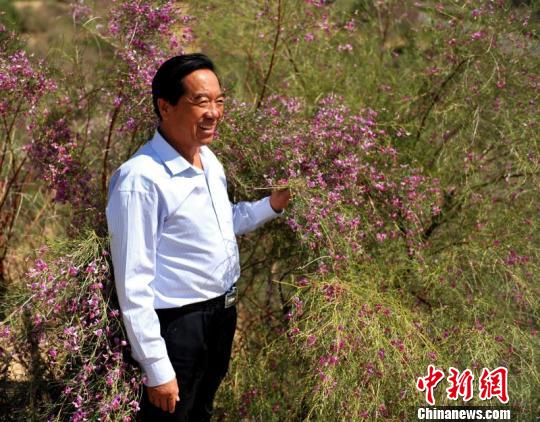
In the Kubuqi Desert, there's another intellectual—Han Meifei. Graduating in 1997, he joined Elion Resources Group and never left the frontline of desertification control since.
Over more than twenty years, Han Meifei progressed from "planting with water bottles and shovels" to breakthrough significant technological innovations like micron airflow planting, spiral drilling technology, and near-natural afforestation method. These technologies save billions in desertification control globally.
In desert tree planting, water is the biggest challenge. In deserts with no water, it must be hauled from far. But the water's cost for irrigation is high, hindering large-scale spraying. Han Meifei’s team developed the micron airflow planting method—using high-pressure airflow to drill, injecting seedlings and moisture simultaneously, saving over 50% water compared to traditional methods while improving survival rates by 30%.
Now, Han Meifei is a chief expert at Elion Desert Ecology. The young technical personnel he trained actively contribute to desertification control in Kubuqi, Tengger, and Taklamakan. Every tree they plant is a crystallization of knowledge and effort.
Why Can They Persist?
When we talk about these desertification control stories, we often ask: What supports them for decades? The answers may vary. Shi Guangyin says it's the memory of being chased by wind and sand in childhood; the six old men say it's the simple desire not to let the next generation suffer the sand's harm; Zhang Xiwang says at first it was the 20 yuan pay per day, but later he heartily loved this oasis. Wang Yinyi says it's the simple belief "I can't let the desert bury my home."
But behind these different answers is a common logic: They're not "environmental for the environment's sake," but "survival necessitates desertification control." The desert threatens their homes, devouring their farmland, so they must resist. This isn't some abstract environmental concept but rather a pressing survival necessity.
In this sense, China's desertification control is a 'people's war.' Both government-initiated, top-down unified planning major projects, and hundreds of thousands of ordinary individuals’ spontaneous involvement and sustained commitment. The government provides direction, funding, and coordination, while ordinary people have planted every tree and watered every seedling. Both complement each other, essential together.
It's this bottom-up power that earned China's desertification control world-renowned achievements. Statistics show China's preserved afforestation reaches 1.314 billion mu, the largest globally. Every year, China's forest coverage steadily rises. In Kubuqi, Tengger, Maowusu, and Taklamakan, the sand is turning into oases little by little.
Chapter Four: Ant Forest—Green Infrastructure at Your Fingertips and Social Responsibility
From "Virtual Energy" to "Desert Oasis"
If Shi Guangyin and others are China’s "flesh and blood Great Wall," then enterprise practices like Ant Forest construct a "digital Great Wall." Since launching in 2016, it doesn't just refer to a public welfare project but operates as a "social mobilization system" based on payment infrastructure.
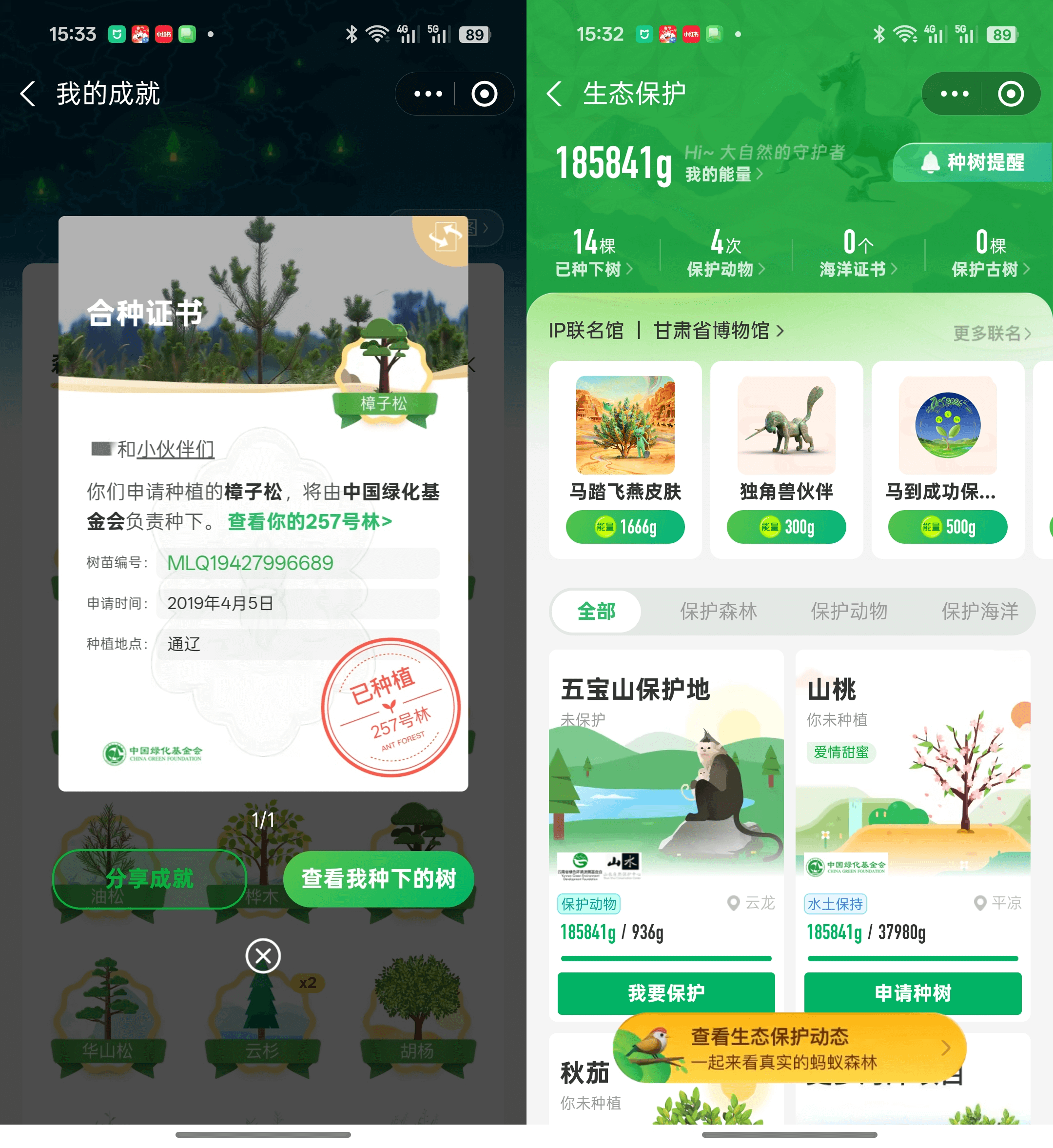
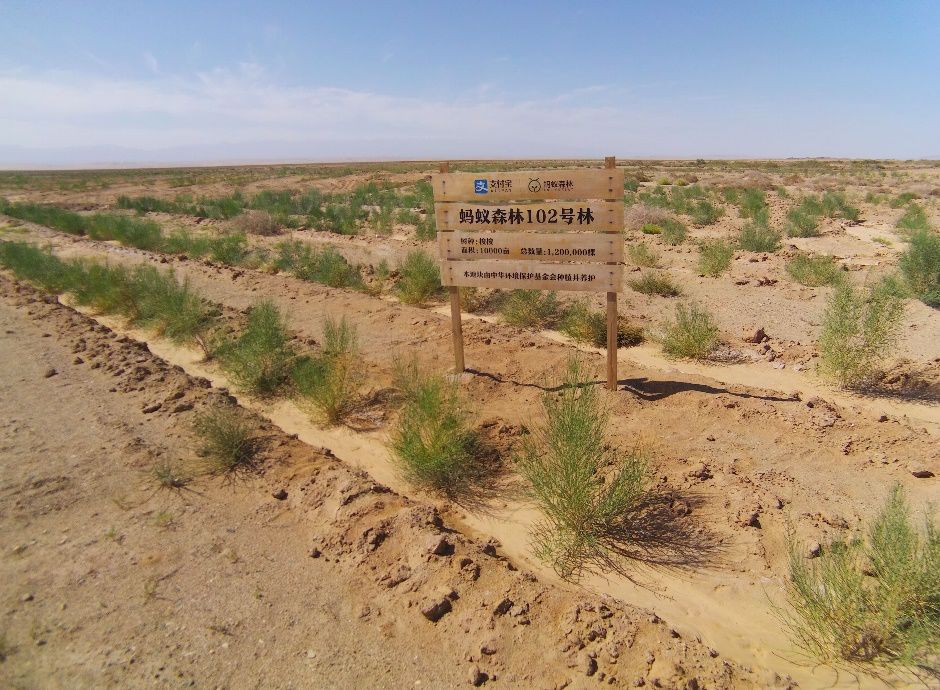
According to the latest 2025 data, Ant Forest has engaged over 750 millionusers. By August 2025, the project cumulatively planted619 million real trees nationwide, with over 6.5 million acres planted. This means that on average, one out of every two Chinese people has "nailed" a tree on earth through low-carbon behavior.
"Systematic Upgrade" of Enterprise Responsibility
Ant Forest's success lies in solving a chronic pain point: the "understanding-action disconnection" in public climate change awareness.
-
Lowering Entry Barriers: By accumulating "green energy" in daily scenarios like walking, paper-plastic reduction, and recycling, decomposing grand environmental propositions into "0-entry-barrier" fun habits.
-
Transparent Closure: Every tree has a unique number, allowing users to "inspect work" through satellite remote sensing and live cameras. This digital trust provided by enterprises transforms public welfare from a "one-time donation" into a "long-term engagement."
-
Ecological and Poverty Alleviation Dual Wins:Ant Forest is not merely tree planting; it is a livelihood project. The project has cumulatively created over4.7 million planting, maintenance, and patrolling jobs for locals, deeply binding ecological restoration with rural revitalization.
A Parable: Not Just Carrying a Lantern, but Paving the Road
If environmental protection is a trek through the night, the government is the giant lighthouse illuminating the direction, the individual is the carrying trekker, then responsible enterprises (like Ant Forest) pave the digital road below the tretaret, enabling each step to be lighter and easier to keep track of.
Chapter Five: Electric Vehicles—A Revolution of Infrastructure, Not a Slogan
While the West Debates, China Acts
In the West, the development of electric vehicles often accompanies intense political debates. Should fuel cars be banned? Will charging facilities affect the urban landscape? Will battery recycling cause new pollution? These issues are repeatedly discussed, sometimes becoming key topics in elections.
In contrast, China chose another path: not by banning but through infrastructure to guide the market. The government's role is "paving the way"—building charging stations, setting subsidies, advancing technology; the market's role is "driving the vehicle"—consumers choose products based on their needs, companies adjust strategies based on market signals.
The Miracle of Charging Station Network
As of now, China has built over 5 million charging piles, with coverage in over 90% of highway service areas. What does this mean? It means that no matter where you drive an electric vehicie, there is no worry of "being stranded" on the road. Urban areas have charging stations, highway service areas have charging stations, and even remote areas begin to popularize charging facilities.
Building this infrastructure requires substantial investment and long-term planning. Unlike the "sporadic pilot" model of some Western cities, China takes a "large-scale rollout" strategy. In the short term, costs are higher, but in the long term, effects are more evident—eliminating "range anxiety" and making electric vehicle adoption possible.
Complete Industry Chain Advantage
China’s advantage in the electric vehicle field lies not only in charging pile quantity but also in possessing a complete industry chain. From lithium mining to battery manufacturing, motor research to vehicle production, Chinese companies virtually control the entire supply chain. Companies like BYD and CATL have become global industry leaders.
This industry chain advantage translates into cost reduction (scale effects reduce production and operation costs), technology iteration (synergy in various industry chain sectors accelerates technological progress), and supply chain security (key technologies and resources are in our hands, reducing external reliance).
Impact on Ordinary People
For the average consumer, electric vehicles mean lower vehicle costs (electricity is cheaper than fuel, and maintenance costs are also lower), quieter driving experience (electric vehicles are quieter than fuel cars), and less environmental burden (no emissions, fresher air). For cities, it means reduced air and noise pollution. For the country, it means less reliance on oil and more secure energy. This silent revolution is changing our way of travel and our relationship with the environment.
Chapter Six: Public Expression and Practical Construction
Those Who Silently Plant Trees
Across China's vast land, tens of thousands are silently planting trees, controlling desertification, building clean energy facilities. They may be farmers planting drought-resistant vegetation on desert edges, technicians installing wind turbines on mountain tops, scientists developing new battery materials in labs, and engineers maintaining photovoltaic panels in remote areas.
These people may not appear on headlines, but their work is effectively changing China's environmental landscape. Statistics show China's preserved afforestation reaches 1.314 billion mu, the largest globally. Every year, China's forest coverage steadily rises.
These people may not deliver speeches, not give interviews, not hit social media hot searches. But every tree they plant, every wind turbine installed, every photovoltaic panel maintained are their tangible contributions.
Another Form of Environmental Expression: High-Visibility Actions
Meanwhile, some Western environmental organizations choose a completely different way of expression. Throwing paint at famous paintings, blocking highways, occupying airport runways—these actions surely attracted media attention and sparked wide discussion.


These actions are controversial for a reason: they are highly effective at attracting attention, but policy conversion and measurable emissions reduction do not always move in step. They can push climate issues into the center of public discussion, yet they may also directly disrupt daily life and weaken public receptiveness.
Reflection on Effect and Impact
The urgency of climate change is real, and public expression remains important. But in long-term governance, outcomes are usually determined by two things: durable policy design and implementable engineering and industrial capacity. In short, making issues visible matters; solving them matters more. The most effective path is to turn social attention into institutional follow-through.
Chapter Seven: Why Did China Choose "Building" over "Protesting"?
The Profound Impact of Historical Experience
To understand China's path choice, one must understand its history. Since modern times, China experienced long-term poverty and weakness, the lesson of "lagging invites aggression" deeply embedded in the collective memory of this nation.
Since the founding of New China, developing the economy and eradicating poverty was always the priority task. Since the reform and opening up, rapid economic growth lifted hundreds of millions out of poverty—unprecedented in human history. However, fast growth also brought environmental costs—air pollution, water deterioration, ecological degradation.
Faced with these problems, China's choice is not "ceasing development" or "returning to the past," but resolving growth problems within development. "Green mountains and rivers are gold mountains and silver mountains" conveys new development ideas: environmental protection and economic prosperity are not oppositional but can be coordinated.
The Support of Institutional Advantages
China's attribute of concentrating power on major tasks plays a significant role in environmental fields. Large-scale environmental projects require long-term investment, unified planning, and cross-regional coordination, achievable relatively efficiently under China's political system.
The Zhangbei wind and photovoltaic base needs land, funds, and technology coordination; Taklamakan's green fence requires unified command, scientific planning, and long-term maintenance; the nationwide charging pile network needs cross-departmental cooperation and extensive investment with continuous operations. These projects may face challenges in Western countries due to political differences, funding shortages, and coordination difficulties, but progress relatively swiftly in China.
This does not imply China's system lacks cost—every system has curtailments. But at least in environmental infrastructure construction, China's systemic advantages are evident.
Different Choices of Development Stage
China is undergoing industrialization and urbanization. This is the phase of emissions growth and a critical period for transformation. Rather than "one-size-fits-all" restricting development, transition parallelism within development—developing while remediating pollution; growing while greening.
This gradual path may not be "thorough" to environmental "fundamentalists," but it aligns better with the world's complexity. A developing nation cannot achieve carbon neutrality overnight but can gradually reduce carbon intensity through continued industrial upgrades and technological advancements.
The Influence of Cultural Tradition
"The predecessors plant trees, the descendants enjoy the shade" is ingrained traditional wisdom in China. China's environmental activities are not a political campaign but a cultural inheritance. Leaving a better ecological environment for future generations is a value recognized in China. This cultural tradition contrasts with the Western "instant gratification" culture. In the West, politicians often need visible results before next elections; while in China, policy makers can focus on long-term goals and plan and execute projects taking decades to realize.
Chapter Eight: Facing the Future—Lessons from Two Paths
China's Challenges and Areas for Improvement
China's environmental transition has made visible progress, but it remains an ongoing process of optimization.
Several common issues require sustained attention: first, strengthening long-term operations and maintenance so projects are not only built, but also kept effective; second, aligning implementation more closely with local ecological conditions to avoid one-size-fits-all planting; third, improving long-cycle evaluation and public review of outcomes; and fourth, addressing new topics brought by clean-energy expansion, such as battery recycling and full life-cycle management of solar panels. Improving these links will make the transition more stable and sustainable.
What Can Be Learned from Western Practice
Western environmental governance also offers many strong examples worth learning from. At the same time, street protests and social movements remain an important force in setting environmental agendas; many issues enter mainstream media and legislation because public actions first push them forward.
From a governance perspective, protest helps raise attention, while construction and institutions convert attention into policy, budgets, and implementation. These are not mutually exclusive. The key is creating a bridge from public pressure to long-term capacity.
For example, in environmental information disclosure, public participation mechanisms, environmental rule of law, ESG reporting, circular economy systems, and low-carbon technology innovation, many European and North American countries have developed mature tools and institutions. For China, learning from these practices can help better combine construction capability with governance capability.
Common Challenges
Ultimately, the Earth's environmental issues are challenges facing all humans. Whether China's builders or the Western protesters, the goal is consistent—we hope for a cleaner, more habitable planet.
In this sense, mutual learning and borrowing between different paths are more valuable than criticizing each other. China can learn from Western experiences in public participation, environmental oversight, and technological innovation; the West can borrow China's practices in infrastructure construction, policy continuity, and overall planning.
Conclusion: Green Planet Needs All Hands
In this era of information explosion and attention scarcity, the true force changing the world often hides in corners not illuminated by spotlights. The quiet ecological revolution China is undertaking is the best lesson.
From Zhangbei to Taklamakan, from wind power to photovoltaic, from Shi Guangyin's green wall to Babusha's three generations succession struggle, China proves through action: environmental protection isn't opposed to economic growth. Via technological innovation, industrial upgrades, and infrastructure builds, it's entirely possible to improve both development and environment.
When recounting Shi Guangyin, six old men, Zhang Xiwang, Wang Yinyi, and Han Meifei's stories, not just individual persistence and contributions are seen; but a development concept victory. These people don't strive for abstract environmental ideals but for their home and descendants to live in a better environment. This simple wish is more powerful than any grand narrative.
This power lies not only in those battling wind and sand but also flows through society’s digital veins. Just like Ant Forest demonstrates: When a responsible enterprise weaves technology, infrastructure, and public participation, miracles occur. Billions of users' every gram of virtual energy eventually manifests as Tamarisk and Haloxylon at desert fringes. This "digital mobilization" successfully turns billions of individuals from "spectators" of grand themes into "partners" in ecological construction. It proved that as long as a reasonable system is constructed, individuals' tiny efforts can be amplified by corporate infrastructure capabilities to change landscapes.
How hard is it to make a tree survive in the desert? Shi Guangyin answered it over more than 40 years—it demands enduring untold hardship, enduring unimaginable fatigue, enduring unendurable loneliness and setbacks. But this tough perseverance transformed the southern edge of Maowusu into a hundred-mile oasis and "sand forcing humans to retreat" into "humans advancing into the sand."
The same logic applies to grand goals like electric vehicles, clean energy, and carbon neutrality. They won't realize because of protests or slogans, but only through countless people's quiet contributions.
This article may not be "exciting"—it lacks dramatic conflicts, lacks stirring slogans, and lacks impassioned critique. But it is "real" enough—it describes what is happening: countless ordinary people's persistence day after day, progress measurable by data and results.
When discussing environmental protection, perhaps shifting slightly from performance and more towards pragmatic action; shifting slightly from accusation and more toward cooperation; shifting slightly from "what can we do" towards "what are we doing."
After all, there is only one Earth—our shared home needing all hands to guard. Whether planting a tree or building a charging station, it's a contribution to this shared home.
In this regard, every quietly working environmentalist—whether planting trees in China's deserts or picking up garbage on Western streets—is deserving of our respect.
Because ultimately, environmental achievements are not measured by what we said but what we did; not by what we protested against, but by what we built.
