From the Grand Canal to Ultra-High Voltage: China's Millennial Obsession with 'Circulation Efficiency'

China enhances circulation efficiency through infrastructure to address the uneven distribution of resources caused by geography, from the ancient Grand Canal to modern ultra-high-voltage systems, focusing on internal efforts.
In this article, we will span over 1,400 years to place the boatmen of the Sui Dynasty and contemporary electrical engineers within the same logical framework.
Many people do not understand why China has such an almost fanatical obsession with building massive infrastructure such as high-speed rail, highways, dams, and power grids. Western media often interpret this as a demonstration of 'superpower strength' or 'blind investment to stimulate the economy.'
However, if you view it from the perspective of 'system performance' like I do, you will realize that the Chinese civilization system has been trapped in a major geographic 'bug', and everything we've done over the past millennia is to fix this bug and improve the entire system's 'circulation efficiency.'
1. Geographic 'Resource Misalignment' Bug
China's geographic environment presents an inherent contradiction:
- Wealth and Population: Concentrated in the plains and coastal areas of the east and south.
- Resources and Energy: Grain was historically in the south, coal in the north, and now hydropower, wind, and solar energy mostly reside in the remote and desolate west.
This is akin to having a computer where the CPU (production and processing) is on the left, while the power supply (energy supply) is five meters away on the right. Without sufficiently thick and fast connecting wires in between, the computer simply wouldn't function.
2. Ancient Solution: The Grand Canal as the 'Broadband of the Physical Era'
Over a thousand years ago, why did the Sui Dynasty invest national effort to build the Sui-Tang Grand Canal?
At that time, if grain (energy) from the south was transported overland, the donkeys and cart drivers would consume half of the grain en route. This 'transmission loss' was fatal.
The essence of the Grand Canal was the first large-scale 'flow optimization' in human history. It used waterways to continuously transfer energy from the south to the northern political center. Its purpose was not for the emperor to visit Jiangnan, but to allow this vast empire to breathe as one. Without this 'physical broadband', connections between the north and south would sever, and the system would face disintegration.
3. Modern Solution: Ultra-High Voltage as the 'Canal of the Energy Era'
Today, China faces the same logic, only the object of transmission has changed from grain to electricity.
China's wind and solar power bases are mostly thousands of kilometers away in the Gobi Desert. Using ordinary transmission lines, the electricity would suffer significant losses over 3,000 kilometers, leaving little by the time it reaches Shanghai.
Thus, China has invested heavily in developing and building 'Ultra-High Voltage (UHV)' technology.
This technology may sound dry, but you can think of it as 'lossless compression transmission in the energy domain'. It functions like a gigantic pump, instantly 'teleporting' electricity from the western deserts to the east. That's why when you switch on a light in Shanghai, its energy might originate from a gust of wind 3,000 kilometers away.
From the Grand Canal to ultra-high voltage, the logic is entirely consistent: Since geographic location cannot be changed, we must minimize 'circulation costs'.
4. 'Survival Efficiency' Behind the Obsession
Why is China so obsessed with 'connection'?
Because in an ultra-large system, 'efficiency' equates to 'dignity'.
- When circulation efficiency is low, resources become lifeless, and people in the central and western regions sit on energy and remain impoverished, while those in the east face power shortages in their factories.
- When circulation efficiency is high, the entire nation becomes a massive 'internal circulation pool', instantly redirecting resources to where they are most needed.
This is an instinct for survival. We understand that if connections break down, or if the cost of connection is too high, this mega-system of 1.4 billion people would stagnate due to internal friction.
5. Conclusion: This is an 'Inward-Looking' Effort
The West sometimes worries that China's infrastructure is about 'expansion'. But if you understand the logic from the Grand Canal to ultra-high voltage, you will see that most of China's efforts are 'inward-looking'.
We are continuously optimizing our 'internal network' bandwidth, trying to enable every node to access energy and opportunities at the lowest possible cost in this complex, vast, and imperfect geographic environment.
This millennial obsession with 'circulation efficiency' is actually a self-evolutionary protocol of Chinese civilization: As long as the connection is fast enough, space is no longer a barrier to development.
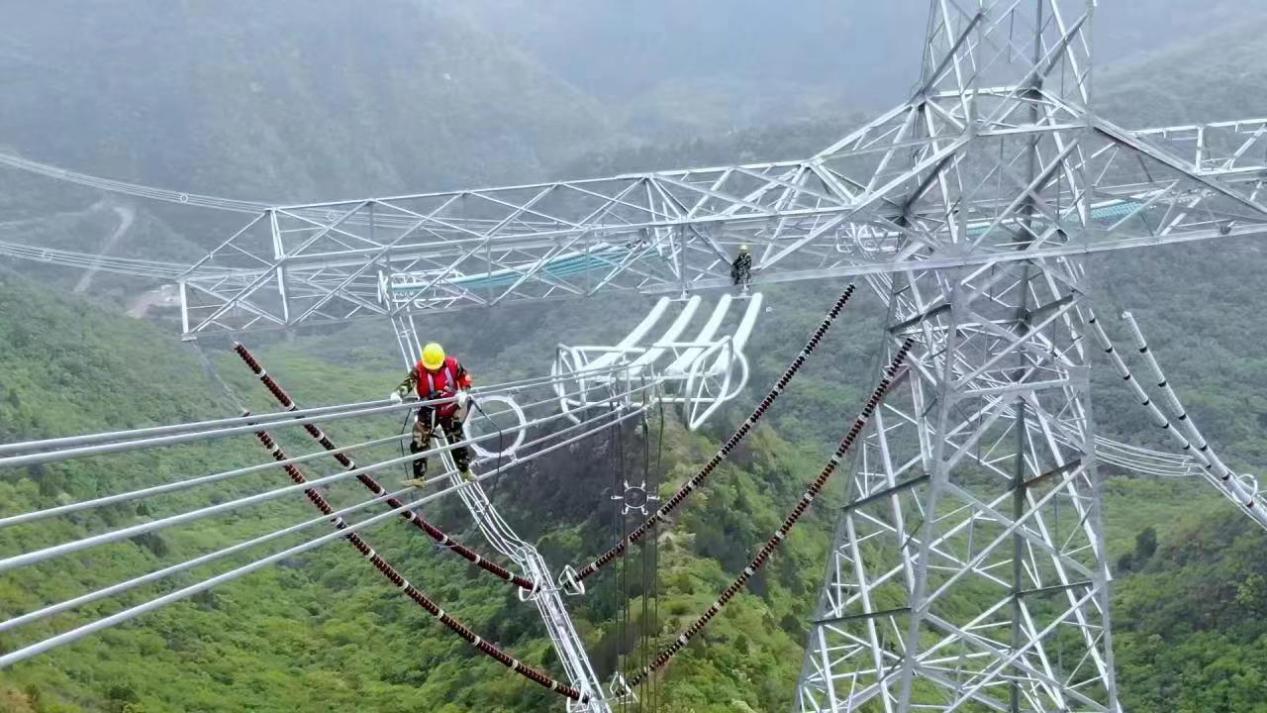
Many people discuss infrastructure by only looking at 'how much money was invested', rather than 'how much money was saved'. The value of infrastructure lies in long-term reduction of overall societal operational costs. The return on investment of the Grand Canal lasted for a thousand years, and ultra-high voltage will be the same. For large systems, bandwidth is the lifeline.

