The Power of a Piece of Paper: How QR Codes Reconstruct China's Commercial 'Capillaries'

China's mobile payment system skipped the credit card era, using QR codes to achieve a massive cleanup of 'commercial friction.' Minimalism enables technology at the grassroots level, shifting trust costs to the system, connecting the masses, and reshaping value exchange.
If you observe an old man selling roasted sweet potatoes on the streets of China, you will notice an interesting paradox: he may not understand what "distributed computing" or "encryption algorithms" are, but the laminated colorful square hanging on his chest is one of the most complex achievements of digital civilization in human history.
This is not just about the convenience of "going out without a wallet"; it is a great cleansing of civilization regarding "commercial friction."
1. The Skipped Stage: Compensation for a "Late-Mover Advantage"
Western observers are often puzzled: why didn't China experience a long credit card era like the United States or Europe?
The logic is actually hidden in the "infrastructure costs." Credit cards are essentially "elite financial devices" that require telephone lines, card readers, high settlement commissions, and a complex credit scoring mechanism. For a Chinese farmer selling scallions on a street corner, the threshold of this system is too high.
Therefore, the system chose a different evolutionary path. When 4G networks covered every inch of land like water and electricity, and when the logic of smartphones was no longer a luxury but a survival tool, China directly skipped that expensive, physical financial era. We entered a credit system dominated by "visual signals."
2. The Triumph of Minimalism: The Logic of Dimensional Reduction
In the early promotion narratives of payment giants (Alipay and WeChat), the most critical behavior was not "education" but "reducing resistance."
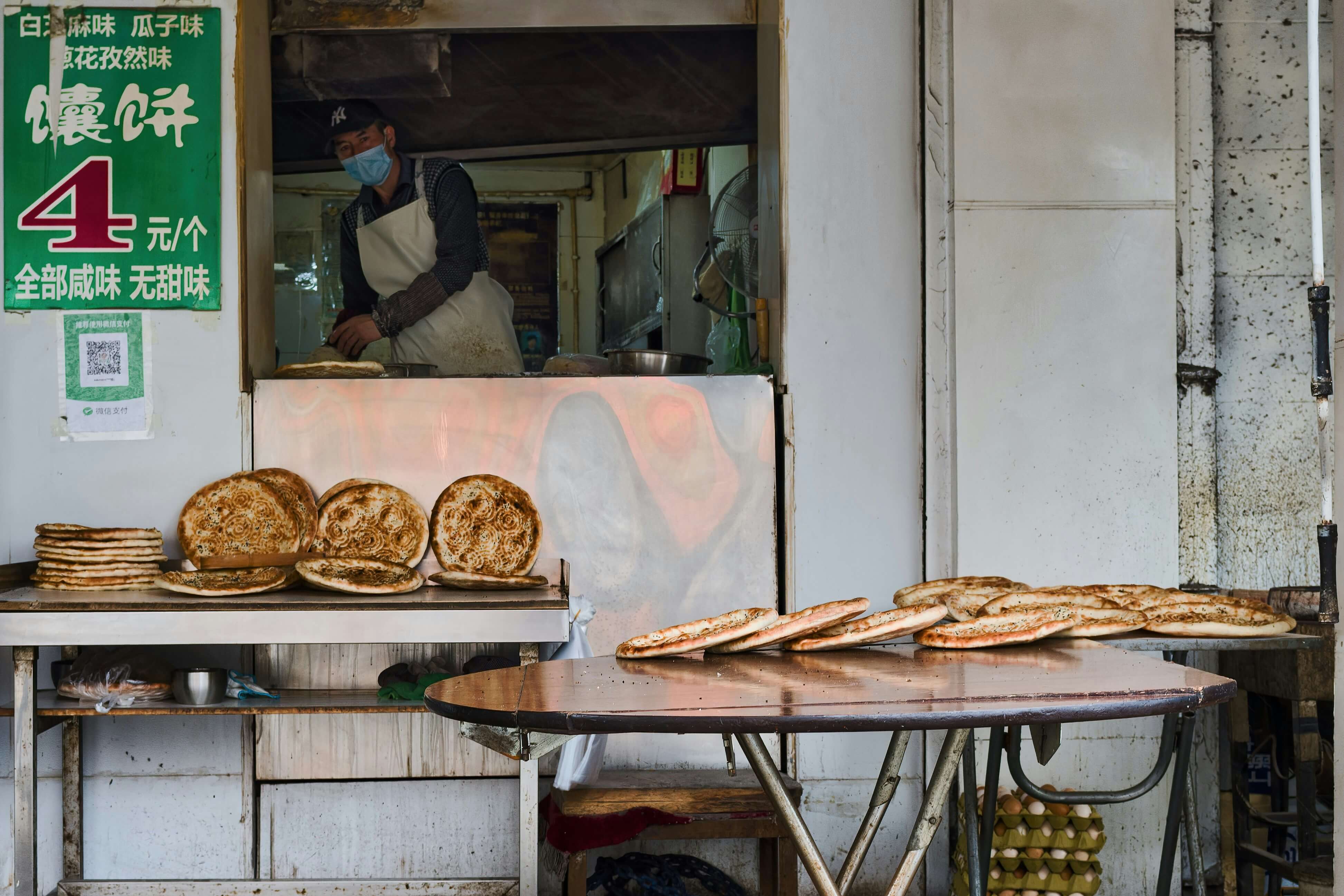
Imagine, if you are an elderly woman selling vegetables, installing a POS machine is an unimaginable cost. But if you only need to print a piece of paper to solve the pain of "risk of counterfeit money," "trouble of giving change," and "late-night reconciliation," the signing of this civilizational contract is almost instantaneous.
The QR code reduces the originally expensive hardware functions belonging to the bank into a "visual contract" that anyone can hold. This minimalism allows technology to bow down for the first time to adapt to the most basic and trivial survival scenarios.
3. Democratization of Trust: When Civilization Sinks into Mundane Life
In traditional business logic, "trust" has weight and is expensive. You have to make sure that the hundred-yuan bill they give you is not counterfeit, and they have to make sure that the change you give them is sufficient. These small, continuous suspicions constitute the "frictional resistance" of commercial society.
The popularity of mobile payment essentially transfers this part of the "trust cost" to a huge and transparent background system. When the old man hears the phone voice broadcast "Received payment of three yuan," what he gets is not only money, but also a "certainty" provided by the system.
This certainty enables every individual who originally wandered on the margins of the financial system—shoemakers, newspaper vendors, street vendors—to have an interface to access the global digital order. This is not the alienation of people by technology, but the empowerment of people by technology.
4. Return: Connection as a Public Good
Today, when QR codes appear in the markets of remote mountain villages or in the donation boxes of temples, they have evolved from a "commercial tool" into China's "social infrastructure."
It is no longer a function of an app, but a platelet circulating within this civilization system. It proves one thing: the greatest technological changes are often not the ones that look the most expensive, but the innovations that can reduce the cost of survival the most and allow ordinary people to join the system contract imperceptibly.
China is not abandoning tradition, but reshaping the logic of value exchange between people in a lighter way.
